
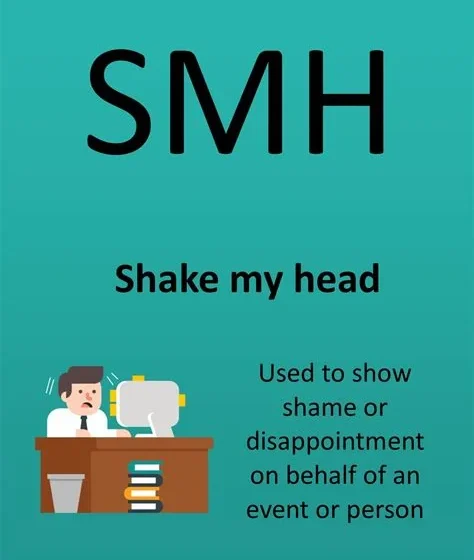

Have you ever read a message that ends with “smh” and wondered what the person was trying to say? You might see it in a text from a friend, a comment on social media, or a group chat about something strange that happened. These three letters may look simple, but they can express several feelings. They often show disbelief, disappointment, frustration, or a reaction that says, “I cannot believe this is happening.”
The SMH meaning in text is “shaking my head.” It describes the gesture people make when they disapprove of something, feel disappointed, or cannot believe what they have just heard. Instead of explaining their reaction in a long sentence, they type SMH. Depending on the situation, it can be serious, funny, sarcastic, or a form of friendly teasing. For example, if your friend forgets their keys for the third time, you might reply, “You did it again? smh.”
SMH is widely recognized in online conversations, including text messages, social media comments, and gaming chats. Still, it does not always sound friendly. A playful message between close friends may feel very different from a blunt “SMH” sent during an argument. In this guide, you will learn what SMH stands for, how to use it naturally, what its variations mean, how to respond to it, and when it is better to choose different words.
What Does SMH Mean in Text?
SMH stands for “shaking my head.” It is an internet abbreviation used to express a reaction to something that seems foolish, disappointing, frustrating, or hard to believe. The letters represent a physical gesture rather than a complete sentence.
Imagine hearing that someone left their phone in the refrigerator or missed an important meeting because they forgot to check the time. You might shake your head in disbelief. In a text conversation, SMH communicates a similar reaction.
For example:
“He forgot his own birthday plans, smh.”
“You watched the whole series and skipped the final episode? SMH.”
“I dropped my sandwich right after making it. smh.”
“They raised the price again? SMH.”
Each example uses SMH to show a reaction. The first two express disbelief, while the third may show embarrassment or frustration with yourself. The last one suggests disappointment about a situation.
SMH does not always mean that the sender is angry. Sometimes, it is a lighthearted way to respond to a silly mistake. Other times, it communicates real disapproval. The words around it and the relationship between the people help determine its tone.
Quick Facts About SMH
| Feature | Explanation |
| Full form | Shaking my head |
| Type | Internet and texting abbreviation |
| Main purpose | Shows disbelief, disapproval, frustration, or disappointment |
| Common tone | Serious, playful, sarcastic, or annoyed |
| Common platforms | Text messages, social media, and online chats |
| Related abbreviation | SMDH |
| Similar reaction | Facepalm |
| Formal or informal? | Informal |
The simplest way to remember SMH is to think of it as a written head shake. The sender is reacting to something without needing to explain every feeling in detail.
What Does SMH Stand For?
The standard meaning of SMH is “shaking my head.” Each letter comes from the phrase: S for “shaking,” M for “my,” and H for “head.”
Unlike an expression such as LOL, which describes laughter, SMH represents a gesture that often communicates disbelief or disapproval. It can replace a longer reaction such as “I cannot believe you did that,” “That is disappointing,” or “What were you thinking?”
Consider this conversation:
Friend: “I stayed up all night studying, but I studied the wrong chapter.”
You: “smh, that is rough.”
Your reply shows that you are surprised by the mistake and feel sorry for your friend. Depending on your relationship, it might also carry a little friendly teasing.
SMH can also be directed at your own actions:
“I walked into the kitchen and forgot why I went there. smh.”
Here, the sender is making fun of their own forgetfulness. They are not necessarily upset. They are simply acknowledging a silly moment.
Can SMH Have Other Meanings?
In some settings, people may use SMH to mean something else, such as “scratching my head” when they are confused. It can also appear as an abbreviation for an organization, publication, or specialized term outside casual texting.
However, when you see SMH in an ordinary message or social media comment, “shaking my head” is the usual interpretation. Check the surrounding words if the meaning is unclear.
What Feelings Does SMH Express?
SMH is useful because it can communicate different reactions without changing the letters. The exact emotion depends on the situation.
Disbelief
People use SMH when something sounds surprising or difficult to believe.
Example:
“My brother said he could drive there in ten minutes, but it takes forty. SMH.”
The sender is questioning the claim or showing that it does not make sense to them.
Disappointment
SMH can express disappointment when someone fails to keep a promise or makes a poor decision.
Example:
“You said you would help, but you never showed up. SMH.”
In this case, the sender may feel let down. The abbreviation makes the disappointment clear, but it can also make the message sound cold.
Frustration
Sometimes, people use SMH when a problem happens again and again.
Example:
“The internet stopped working right before my meeting. smh.”
The sender is frustrated by the situation. They may not be blaming a particular person; they are simply expressing annoyance.
Embarrassment
SMH can be used when someone makes a mistake and feels silly about it.
Example:
“I sent the message to the wrong group chat. smh.”
The sender is probably embarrassed and may be laughing at themselves. It can be a way to admit a mistake without making a big deal out of it.
Playful Teasing
Friends often use SMH to joke about each other’s habits or choices.
Example:
Friend: “I ordered food and then remembered I already ate.”
You: “smh 😂 how does that even happen?”
The laughing emoji makes the reaction seem more playful. Without it, the message might feel more judgmental.
Sarcasm
SMH can also appear in sarcastic comments about everyday problems.
Example:
“Another meeting that could have been an email. SMH.”
The sender is expressing annoyance in a slightly humorous way. The abbreviation gives the comment a tone of disbelief or tired frustration.
How to Use SMH in Text Messages
SMH is easy to use once you understand the feeling you want to express. It can appear at the beginning, middle, or end of a message. There is no single correct position.
Put SMH at the Beginning
Starting with SMH makes your reaction clear right away.
Examples:
“SMH, he forgot the tickets again.”
“smh, why would you do that?”
“SMH, we just talked about this yesterday.”
This placement often emphasizes disappointment or disbelief.
Put SMH at the End
Ending with SMH lets the message explain the situation first and add the reaction afterward.
Examples:
“I missed the bus by five seconds, smh.”
“She left her lunch on the counter again. SMH.”
“I spent an hour looking for the remote, and it was beside me the whole time, smh.”
This style is common in casual messages because it reads like a final sigh or head shake.
Use SMH on Its Own
Sometimes, a single “smh” is enough.
For example:
Friend: “I forgot to save the file before closing the computer.”
You: “smh”
This short reply can show disbelief, sympathy, or playful frustration. However, a standalone response can be hard to interpret if the conversation is serious. Adding a few words may make your intention clearer.
Combine SMH With Emojis
Emojis can help show whether your reaction is playful or serious.
“smh 😂” often suggests amusement or teasing.
“smh 🤦” emphasizes frustration or a mistake.
“SMH 🙄” may suggest annoyance or disbelief.
“smh 😭” can show exaggerated frustration or humorous despair.
These meanings are not fixed. People use emojis differently, so the full conversation still matters.
Use SMH About Yourself
SMH does not have to criticize someone else. You can use it when you are disappointed in your own decision or amused by your mistake.
Examples:
“I forgot my password again, smh.”
“I went shopping and forgot the one thing I needed. SMH.”
“I spent twenty minutes looking for my glasses while wearing them. smh.”
Self-directed SMH can make a message feel relatable and lighthearted. It shows that you can laugh at yourself.
SMH Meaning on Snapchat, TikTok, Instagram, and WhatsApp
The basic meaning of SMH stays the same across most social platforms. What changes is the situation and how the message may be received.
SMH on Snapchat
On Snapchat, SMH may appear in direct messages, group chats, or replies to a friend’s story. It often reacts to a funny mistake, an unexpected event, or something the sender finds unbelievable.
Example: “You posted that picture without checking it first? smh 😂”
The laughing emoji suggests friendly teasing, but the relationship between the people still matters.
SMH on TikTok
On TikTok, people may use SMH in comments about surprising videos, questionable choices, or opinions they disagree with.
Example: “He watched the tutorial and still did it backward. SMH.”
A public comment can sound sharper than a private message because other people may read it as criticism. The same three letters can be playful or dismissive depending on the subject.
SMH on Instagram
On Instagram, SMH can appear in comments, captions, Stories, or direct messages. People may use it to react to an awkward moment, an unexpected announcement, or a post they find frustrating.
Example: “The restaurant forgot half the order again, smh.”
It can also be used as a short reaction to a friend’s story. If you want to avoid sounding rude, explain what you are reacting to instead of sending only the abbreviation.
SMH on WhatsApp
In WhatsApp chats, SMH is often used between friends, relatives, and members of group chats. It can show annoyance about everyday problems or playful disbelief about something another person did.
Example:
Friend: “I left my keys inside the house again.”
You: “smh 😂 not again!”
Here, the response is likely to be teasing rather than seriously critical.
SMH in Gaming Chats
Gamers may use SMH after a teammate makes a mistake, a plan fails, or something unexpected happens during a match.
Example: “We had the win and then everyone ran in alone, smh.”
This can be a joke among friends, but it may also express real frustration. In competitive settings, SMH can sound like blame, especially if someone is already upset about losing.
What Is the Difference Between SMH and SMDH?
SMDH stands for “shaking my damn head.” It is a stronger version of SMH that adds emphasis. People often use it when they feel especially disappointed, frustrated, or unable to believe what happened.
For example:
“He forgot his wallet again, smh.”
“He forgot his wallet for the fourth time this week, SMDH.”
The second example sounds more intense. The added word makes the reaction stronger, although some people use SMDH casually without intending serious anger.
You may also see SMFH, which commonly stands for “shaking my f***ing head.” This version contains profanity and is more forceful. It is best avoided in professional conversations and with people who may not appreciate strong language.
| Slang | Full form | Usual tone |
| SMH | Shaking my head | Disbelief or disapproval |
| SMDH | Shaking my damn head | Stronger frustration or disappointment |
| SMFH | Shaking my f***ing head | Strong frustration, often with profanity |
These forms are informal. Their tone depends on the person using them and the conversation in which they appear.
SMH vs. Similar Texting Slang
SMH belongs to a larger group of short expressions people use to react to messages, opinions, and events. Some terms express laughter, while others show agreement, annoyance, or surprise.
| Term | Meaning | Main difference from SMH |
| LOL | Laughing out loud | Usually signals amusement |
| TBH | To be honest | Introduces an honest opinion |
| IDC | I don’t care | Signals a lack of concern |
| FR | For real | Adds emphasis or agreement |
| NGL | Not gonna lie | Introduces a candid statement |
| Facepalm 🤦 | A gesture of putting a hand over the face | Often shows embarrassment or frustration visually |
| SMDH | Shaking my damn head | A stronger version of SMH |
SMH vs. LOL
LOL usually indicates laughter or amusement. SMH usually shows disbelief, disapproval, or frustration.
For example, “That joke was hilarious LOL” expresses laughter. “You forgot your own birthday? SMH” expresses disbelief or playful criticism.
People can combine them when something is both funny and ridiculous: “LOL smh, I can’t believe that happened.”
SMH vs. Facepalm
A facepalm is a gesture in which someone covers their face with a hand, often because of embarrassment, frustration, or disbelief. The facepalm emoji 🤦 can communicate a reaction similar to SMH.
The difference is that SMH uses letters, while the emoji provides a visual image. Some people use both together to make the reaction stronger.
SMH vs. IDC
IDC means “I don’t care.” It can sound dismissive because it suggests the person is not interested or concerned. SMH usually means the person has a reaction to something they find disappointing or unbelievable.
For example, “IDC what they choose” suggests indifference. “SMH at that decision” suggests disapproval or disbelief.
Is SMH Rude or Disrespectful?
SMH is not always rude, but it can sound judgmental. It depends on the words around it, the situation, and the relationship between the sender and the receiver.
Between close friends, SMH may be harmless teasing. If someone makes a silly mistake and you reply “smh 😂,” they will probably understand that you are joking, provided this kind of humor is normal between you.
However, sending “SMH” by itself during a serious disagreement can feel dismissive. It may suggest that the other person’s opinion is foolish or not worth discussing. In public comments, it can also come across as an insult because the message is visible to other people.
Think about these examples:
Playful: “You bought snacks and forgot the movie? smh 😂”
Critical: “SMH. You should know better than that.”
Dismissive: “smh. Whatever.”
The first example sounds lighthearted. The second expresses disapproval, and the third may suggest that the sender does not want to continue the conversation.
If you are unsure how the other person will take it, use clear words instead. Saying “I don’t understand that decision” or “That was disappointing” explains your meaning more directly than SMH.
How Should You Reply When Someone Sends SMH?
The best response depends on whether the sender is joking, criticizing you, or reacting to something that happened.
If They Are Joking
If a friend sends SMH after a silly mistake, you can laugh along.
Examples:
“I know 😂”
“Don’t judge me!”
“It happens.”
“I’m having a rough day.”
“I deserved that one.”
These replies keep the mood friendly.
If They Are Disappointed in You
If the person seems genuinely upset, do not assume they are joking. Consider what happened and whether you owe them an explanation.
You might reply:
“You’re right. I should have checked first.”
“Sorry, that was my mistake.”
“I understand why you’re frustrated.”
“Let me explain what happened.”
A calm response is usually more helpful than arguing about the abbreviation.
If They Are Reacting to a Shared Problem
Sometimes, both people are annoyed about the same event. You can agree with their reaction.
Example:
Friend: “The delivery is late again. SMH.”
You: “Honestly, this keeps happening.”
This response shows that you understand their frustration.
If You Do Not Understand Their Tone
If you cannot tell whether the sender is teasing or criticizing you, ask for clarification.
For example:
“Are you joking or are you serious?”
“Wait, what do you mean?”
“Did I do something wrong?”
A short question can prevent a small misunderstanding from turning into an argument.
If Someone Uses SMH Against You Online
You do not have to respond to every critical comment. If the message is a harmless joke, you can ignore it or reply lightly. If it is insulting or meant to start an argument, stepping away may be the better choice.
Focus on the meaning of the full message rather than treating SMH alone as proof that someone is angry.
When Should You Avoid Using SMH?
SMH is best suited to informal conversations. It is useful in friendly chats, casual social media comments, and discussions where people understand each other’s humor. However, it is not the best choice for every situation.
Avoid or use it carefully in these settings:
Professional emails: Write a clear sentence instead of using informal slang.
Messages to managers or clients: SMH can look disrespectful or unprofessional.
Serious disagreements: It may make the other person feel dismissed.
Emotional conversations: Someone who needs support may interpret it as criticism.
Messages to unfamiliar people: They may not know the abbreviation or understand your tone.
Public criticism: A short SMH comment can look like mockery when others see it.
For example, if a coworker tells you they made a mistake on an important task, replying “SMH” may make them feel worse. A more useful response would be, “That sounds stressful. Do you need help fixing it?”
On the other hand, telling your friend “You forgot your umbrella again, smh” may be perfectly normal if you both enjoy that kind of teasing.
The goal is not to avoid SMH completely. It is to use it when it fits the relationship and the moment. If the message needs kindness, clarity, or professionalism, full words are usually the safer option.
Frequently Asked Questions
What does SMH mean in text messages?
SMH means “shaking my head.” People use it in text messages to show disbelief, disappointment, disapproval, or frustration. It can also be playful when friends are teasing each other. The exact meaning depends on the message, the relationship, and the situation.
Is SMH a bad or rude word?
SMH is not a swear word. However, it can sound rude or judgmental if it is used to criticize someone or dismiss their opinion. Between friends, it may be harmless teasing. In a serious conversation, adding an explanation or using clearer words can help avoid misunderstanding.
What does SMDH mean in texting?
SMDH usually stands for “shaking my damn head.” It is a more emphatic version of SMH and often expresses stronger frustration, disbelief, or disappointment. It is informal and may sound more intense, depending on the conversation.
What does SMH mean on Snapchat and TikTok?
On Snapchat and TikTok, SMH usually has the same meaning as in text messages: “shaking my head.” People use it to react to something surprising, frustrating, disappointing, or ridiculous. In a private chat it may feel playful, while a public comment can sound more critical.
How do I respond when someone texts me SMH?
If the person is joking, you can reply with “I know 😂,” “Don’t judge me,” or another playful comment. If they seem disappointed, acknowledge the issue and explain yourself when needed. If you cannot tell what they mean, ask whether they are joking or serious.
Conclusion
The SMH meaning in text is “shaking my head.” It is a short, familiar way to express disbelief, disappointment, frustration, or disapproval without writing a long response. People use it in private messages, group chats, gaming conversations, and social media comments. It can also be a playful reaction to a friend’s mistake or a funny situation. Related expressions such as SMDH make the reaction stronger, while terms like LOL and facepalm communicate different shades of emotion.
The most important thing is to pay attention to context. A casual “smh 😂” between friends may be funny, while a blunt “SMH” during a serious discussion can feel dismissive. Use it when the tone is informal and the other person is likely to understand your meaning. When a situation calls for kindness, clarity, or professionalism, explain your thoughts in plain words instead. Once you understand how SMH works, you can recognize it easily and respond in a way that fits the conversation.
Explore more on Celeb Snips.


-
-
-
-
-
-
-
-
-
-
-
-
-
-
-
-
-
-
-
-
-
-
-
-
-
-
-
-
-
-
Show Comments[…] wondered what those three letters mean? You are not alone. Many people use short forms in texts and online chats, and some are harder to understand than others. IMS is one of those abbreviations that can leave […]
[…] stands for “I don’t think so.” It is an informal abbreviation used in text messages, social media comments, direct messages, and online […]
[…] It is a short way to ask someone how they are feeling or how things are going. People use it in text messages, social media DMs, group chats, and dating apps. Instead of typing the full question, they use HRU […]
[…] easy to understand once you know what the letters mean. GTG is a common abbreviation used in text messages, online chats, and social media […]
[…] while “ion wanna go” means “I don’t want to go.” You may see it in text messages, social media comments, captions, and direct messages. It can make a message sound relaxed, […]
[…] that simply says “WYF?” and wondered what the person is asking? You might see it in a text, a Snapchat message, an Instagram DM, or a conversation with someone you have just met online. […]
[…] “WYO?” and wondered what the sender wants to know? This short abbreviation appears in text messages, social media chats, and dating app conversations. If you have not seen it before, its meaning may […]
[…] question, they use three letters to keep the conversation short and casual. You may see it in text messages, group chats, social media comments, and direct […]
[…] you ever received a message that says “WYFF?” and wondered what the person was asking? Texting slang can be confusing, […]
[…] you ever received a message that says “tmp me the details” or seen someone write “this is just a tmp fix”? If you have, […]
[…] you have seen TMI in a text message, comment, or social media post, you may wonder what it means. TMI stands for “Too Much […]
[…] letters thousands of times without knowing that tiny detail. If you have ever seen “TIL” in a text message, Reddit post, or social media comment, you have probably noticed that it often introduces a […]
[…] may see TBH in text messages, Instagram comments, TikTok captions, Snapchat chats, and group conversations. It has also been […]
[…] you ever received a message that says “I need smt” or seen someone comment “SMT” under an Instagram post? If you were unsure what those three letters meant, you are not alone. Texting slang changes […]
[…] became popular in letters, people still use it in text messages, emails, social media captions, and direct messages. It can make a message feel friendly, funny, or personal. In other situations, PS can mean […]
[…] letters mean? You might see it in a Snapchat conversation, a TikTok comment, an Instagram DM, or a group chat. At first, it can be confusing because the abbreviation does not explain itself. The good news is […]
[…] may see it in private messages, group chats, gaming conversations, social media captions, and comments. It is most suitable for […]
[…] Snapchat, ML may appear in private chats, snaps, or replies to stories. People often use short abbreviations because conversations move […]
[…] off.” It is a popular internet slang expression used to show strong amusement. People use it in text messages, group chats, online games, and social media comments. Although the phrase sounds dramatic, the […]
[…] are chatting with a friend when a short message appears: “lght.” It looks like a word with missing letters. You may wonder if it is a typo, a […]
[…] everyday texting, GTS usually stands for “go to sleep.” It is a short, informal way to tell someone to get some […]
[…] everyday texting, HM usually means “hmm.” It represents the sound people make when they pause to think about […]
[…] similar expressions […]
[…] in text is usually Short Message Service. It is the technology traditionally used to send short text messages between mobile phones. When someone asks you to send an SMS, they usually mean a regular text […]
[…] someone sends you “SPWM” in a text message, you might wonder what those four letters mean. In most casual texting and social media […]
[…] use STH in text messages, online chats, personal notes, and other forms of informal writing. It is a fast way to write a […]
[…] a friend ends a conversation with “tty,” you might wonder what those three letters mean. Is it a quick […]
[…] Instagram, SFS usually means shoutout for shoutout. People use it in direct messages, Story captions, comments, and profile descriptions. It is especially common among creators and […]
[…] are chatting with friends when someone suddenly sends a short message: “wdp?” You may have seen this abbreviation on […]
[…] you ever received a message that simply says “wys” and wondered what the sender meant? This short abbreviation can be […]