
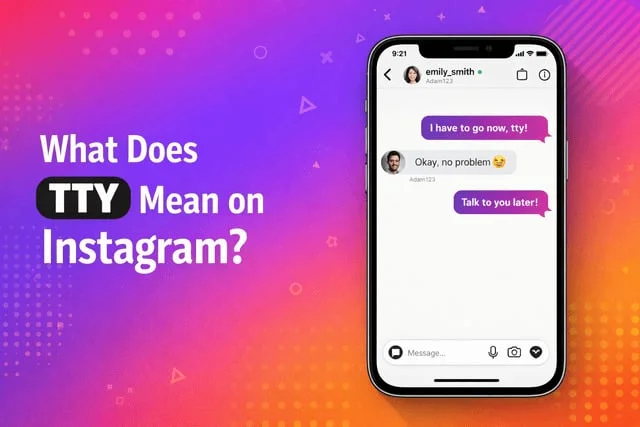

When a friend ends a conversation with “tty,” you might wonder what those three letters mean. Is it a quick goodbye? Does the person want to talk again later? Or is it a technical term you have never seen before? Understanding the TTY meaning in text is usually simple once you know the context. In casual online conversations, TTY commonly stands for “talk to you.” It is a short way to end a chat while suggesting that you may speak again.
You might see TTY in a text message, a social media direct message, or an online gaming chat. For example, someone might write, “My ride is here, tty!” or “Thanks for chatting, tty tomorrow.” It keeps the goodbye short and friendly. The related abbreviation TTYL means “talk to you later” and makes the idea of a future conversation more explicit.
However, TTY has another important meaning outside casual texting. In technology and accessibility, TTY stands for “teletypewriter,” a type of text-based communication device historically used by people who are deaf, hard of hearing, or have speech disabilities. This guide explains both meanings, gives everyday examples, compares TTY with similar abbreviations, and shows you when it is appropriate to use it.
What Does TTY Mean in Text?
In informal texting, TTY means “talk to you.” People often use it as a casual sign-off when they are about to leave a conversation. It may suggest that they plan to talk again, although it does not always give a specific time.
Think of TTY as a shorter way to say, “I have to go now, but we can talk again.” It is usually friendly and relaxed. People use it with friends, family members, classmates, and other contacts they regularly message.
| Abbreviation | Common meaning | Typical use |
| TTY | Talk to you | Casual sign-off or promise to talk again |
| TTYL | Talk to you later | Ending a conversation for now |
| TTYS | Talk to you soon | Suggesting another conversation in the near future |
| GTG / G2G | Got to go | Letting someone know you need to leave |
| BRB | Be right back | Stepping away briefly |
| CU / CUL8R | See you / See you later | Casual goodbye |
For example, if your friend says, “I have class now, tty,” they are ending the current chat. They may expect to speak with you later, but the message does not set a fixed time. If they write “tty tomorrow,” they give you a clearer idea of when you might talk again.
Examples of TTY in Text Messages
The meaning becomes easier to understand when you see TTY in everyday conversations. Here are common examples of how someone might use it.
When Someone Is Busy
“My ride is here. tty!”
The sender needs to leave because their ride has arrived. TTY provides a quick, friendly ending instead of stopping the conversation without explanation.
When You Plan to Talk Tomorrow
“I have to finish my homework. tty tomorrow 😊”
Here, the sender is finishing the conversation for the day but expects to speak again tomorrow. The word “tomorrow” makes the plan more specific than TTY alone.
When Ending a Group Chat
“This was fun, tty everyone later!”
This is a friendly way to leave a group conversation. The sender acknowledges the group and indicates that they may return to chat another time.
When You Are Going to Sleep
“Getting sleepy now. Night, tty tomorrow 💕”
The sender is saying goodnight and suggesting that the conversation will continue the next day. The heart emoji adds warmth, making the message feel affectionate rather than abrupt.
When Logging Off a Game
“GGs, guys. I’m logging off. tty!”
In this example, the player is ending the gaming session. “GGs” means “good games,” while TTY suggests that the player may chat or play with the group again.
What Is the Difference Between TTY and TTYL?
TTY and TTYL are closely related. TTY means “talk to you,” while TTYL means “talk to you later.” Both can be used as informal sign-offs, but TTYL includes the word “later,” making the meaning more complete.
| Feature | TTY | TTYL |
| Full form | Talk to you | Talk to you later |
| Style | Very brief and casual | Casual and slightly more explicit |
| Future conversation | Often implied by context | Directly suggested |
| Example | “Heading out, tty!” | “Heading out, ttyl!” |
In everyday use, the two can serve nearly the same purpose. The difference is not a strict rule about how soon the next conversation must happen. TTYL does not guarantee that someone will message you in a few hours, and TTY does not mean that they will never speak to you again.
Both are informal abbreviations. You can choose whichever sounds natural for your conversation. If you want to make a plan, add a time: “tty after class” or “ttyl tomorrow.” That is clearer than expecting the other person to guess what “later” means.
What Does TTY Mean in Technology and Accessibility?
TTY also stands for teletypewriter. This is a different meaning from the texting abbreviation. A TTY is a text-based telecommunications device that allows people to communicate through typed messages over a telephone connection or compatible relay service.
Historically, TTY devices were especially important for people who are deaf, hard of hearing, or have speech disabilities. A user could type a message on a keyboard and read the incoming response on a display. The technology helped make telephone communication more accessible before modern text messaging and internet-based communication became widespread.
Government agencies and accessibility resources still use the term TTY. For example, HealthCare.gov’s TTY glossary explains the term in connection with communication access. The U.S. Department of Justice also lists TTY as an abbreviation for teletypewriter in its guidance on access to 911 and telephone emergency services.
How Can You Tell Which TTY Meaning Applies?
Context is the easiest clue. If a friend sends “my bus is here, tty,” they are probably using the casual texting abbreviation. If a website lists a TTY phone number next to a customer service number, it is referring to an accessibility communication option.
Capitalization can offer a clue, too. Casual users may write “tty” in lowercase, while official documents often write “TTY” in capital letters. However, capitalization is not a reliable rule by itself. Many people write all texting abbreviations in uppercase, and technical terms can appear in different formats.
Read the whole sentence and consider where you saw the term. A personal message, an accessibility notice, and a computer terminal guide are very different contexts.
Where Do People Use TTY in Online Conversations?
As a casual abbreviation, TTY can appear in many types of digital communication. It is not limited to one app or device. People use it wherever short, informal messages are common.
TTY in SMS and WhatsApp
In regular text messages and WhatsApp chats, TTY can be a quick way to end a conversation. For example, “Dinner is ready, tty!” tells the other person that you need to stop chatting for now. You might also see “Night, tty tomorrow” between friends or family members.
TTY on Instagram and Snapchat
On Instagram and Snapchat, TTY may appear in direct messages. Someone might add an emoji, sticker, or photo to make the goodbye more personal. For example, “I’m heading out now, tty 😊” is a casual way to leave the conversation while keeping the tone friendly.
TTY on Discord and in Gaming Chats
Gaming communities often use short sign-offs because players may need to leave between matches or stop playing without much explanation. A player might say, “Good game, tty next time,” or “I have to log off, tty!” This helps end the session without making the departure sound unfriendly.
TTY in Group Conversations
In group chats, TTY can help someone leave without ignoring everyone. A message such as “I have work early, tty all later!” signals that the person is leaving and may return to the conversation another time. If you want to be more specific, you can name the next time you expect to talk.
Is TTY Friendly, Rude, or Dismissive?
TTY is generally casual and neutral. It does not automatically mean that the sender is annoyed, bored, or trying to end a friendship. Often, it simply means they need to leave the conversation and want to sign off quickly.
Still, the surrounding message affects how it feels. “Thanks for talking, tty tomorrow!” sounds warm and clear. A bare “tty” after a serious or emotional conversation might feel too brief, especially if the other person expected support or reassurance.
When TTY Works Well
- You are ending a casual chat with a friend.
- You need to leave for class, work, dinner, or another activity.
- You have already agreed to talk again.
- The conversation is light and does not need a long goodbye.
When a Longer Goodbye Is Better
- Someone has shared a personal problem.
- You are ending a serious discussion.
- The other person may misunderstand why you are leaving.
- You need to make a clear plan for your next conversation.
For example, instead of ending an emotional chat with only “tty,” you could write, “Thanks for telling me. I need to go for now, but I can talk with you tomorrow.” This is more reassuring because it acknowledges what the other person shared and explains when you may be available again.
How to Use TTY Naturally
Using TTY well is mostly about choosing the right moment. It works best when the conversation is casual and the other person understands texting abbreviations.
Add a Reason When It Helps
You do not need to explain every time you leave a chat. However, a short reason can make the goodbye feel more natural.
- “My class is starting, tty!”
- “I need to drive now, tty later.”
- “Going to bed. Night, tty tomorrow.”
- “I have to run, tty after work.”
These examples tell the other person why you are leaving and keep the tone friendly. They also reduce the chance that someone will mistake your absence for anger or disinterest.
Do Not Promise a Time You Cannot Keep
TTY alone does not set a time for the next conversation. If you say “tty in five minutes” and then become unavailable for hours, the other person may be confused. If you are unsure when you will return, a simple “I have to go for now, talk later!” is more flexible.
Know When to Use Full Words
TTY is informal, so it may not fit every situation. In a professional email, a message to a client, or a conversation with someone who may not know the abbreviation, write “talk to you later,” “speak soon,” or “I’ll follow up tomorrow.” These phrases are clearer and more suitable for formal communication.
TTY vs. Other Common Texting Abbreviations
TTY is one of several short forms people use to end conversations or explain that they are leaving. Although these abbreviations can look similar, they communicate slightly different things.
| Term | Meaning | Best time to use it |
| TTY | Talk to you | Casual sign-off when another conversation is expected or possible |
| TTYL | Talk to you later | Ending the current conversation for now |
| TTYS | Talk to you soon | When you expect to talk again soon |
| GTG / G2G | Got to go | When you need to leave |
| BRB | Be right back | When you are stepping away briefly and expect to return |
| BBL | Be back later | When you expect to return at a later time |
| GN | Good night | When ending a conversation before sleep |
| CU | See you | Casual goodbye, especially when you expect to meet or talk again |
The main difference is the message each abbreviation emphasizes. GTG tells the other person that you need to leave. BRB suggests a short break. TTY and TTYL focus more on talking again. Choosing the right one helps make your meaning clear without writing a long explanation.
Common Mistakes to Avoid When Using TTY
Although TTY is simple, a few common mistakes can make a message confusing or less friendly than you intend.
- Using it during a serious moment: A short sign-off can sound dismissive when someone needs support. Add a caring sentence when appropriate.
- Assuming everyone knows it: Some people may not recognize TTY as texting slang. Spell out the phrase when needed.
- Confusing it with TTYL: TTY means “talk to you,” while TTYL means “talk to you later.” They are related but not identical.
- Using it in formal communication: A full phrase such as “I’ll speak with you tomorrow” is more suitable for professional messages.
- Assuming it guarantees a follow-up: TTY suggests future contact in many contexts, but it is not a firm promise unless the sender gives a clear plan.
Another useful tip is to avoid sending a sign-off and then continuing to message repeatedly without explanation. If you are still available, you can simply keep chatting. If you need to leave, finish your message naturally and return when you can.
Frequently Asked Questions
What does TTY mean in a text message?
In casual texting, TTY usually means “talk to you.” It is a short, informal way to end a conversation while suggesting that you may speak again. The exact timing depends on the context. In technology and accessibility settings, TTY can instead mean “teletypewriter.”
What is the difference between TTY and TTYL?
TTY means “talk to you,” while TTYL means “talk to you later.” Both can be used as casual sign-offs, but TTYL states the idea of talking later more clearly. Neither abbreviation sets an exact time unless the sender adds one.
Does TTY mean goodbye?
Yes, in many casual conversations, TTY works as a goodbye for now. It usually suggests that the person is leaving the chat but may talk with you again. It is not necessarily a permanent goodbye or a sign that the sender is upset.
What does TTY mean on Instagram, Snapchat, or Discord?
On Instagram, Snapchat, Discord, and similar platforms, TTY generally has the same informal meaning: “talk to you.” People may use it when leaving a direct message, group chat, or gaming session. The platform does not usually change the meaning of the abbreviation.
Is TTY rude or appropriate for work?
TTY is usually neutral and friendly in casual conversations, but it may sound too brief during a serious discussion. It is also informal for most professional messages. In work emails, use phrases such as “talk soon,” “I’ll follow up tomorrow,” or “speak with you later” for a clearer and more professional tone.
Conclusion
The TTY meaning in text is usually “talk to you.” It is a quick, casual sign-off that lets someone leave a conversation without making the goodbye feel final. You may see it in text messages, group chats, social media DMs, and gaming conversations. It is closely related to TTYL, which means “talk to you later” and makes the future conversation more explicit.
Remember that TTY also means “teletypewriter” in accessibility and telecommunications settings. The surrounding context tells you which meaning applies. Use TTY with friends when a short goodbye feels natural, and choose complete phrases for serious or professional conversations. A few extra words can make your message warmer, clearer, and easier to understand.
Explore more on Celeb Snips.