

Have you ever finished reading a text and noticed two extra letters at the end: “PS”? You may have wondered whether they are part of a secret code or just another internet abbreviation. The good news is that PS has a simple meaning in most everyday conversations.
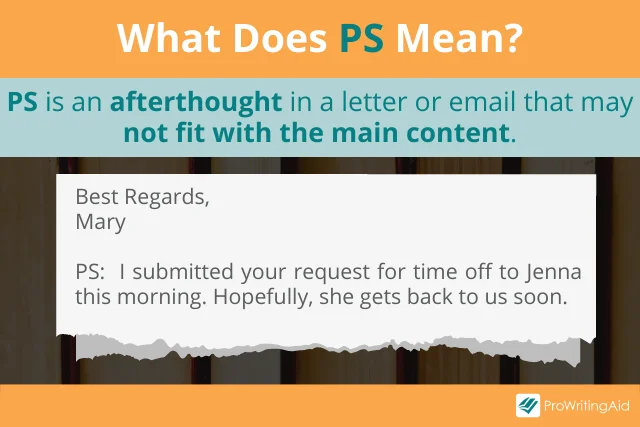
PS usually stands for “postscript.” It is used to add an extra thought, reminder, joke, or detail after the main message. For example, someone might text, “See you tomorrow! PS: Don’t forget your jacket.” The first part shares the plan, while the PS adds one more reminder.
Although PS first became popular in letters, people still use it in text messages, emails, social media captions, and direct messages. It can make a message feel friendly, funny, or personal. In other situations, PS can mean PlayStation or Photoshop. This guide explains the ps meaning in text, shows how to use it naturally, and answers common questions about this familiar abbreviation.
What Does PS Mean in Text?
In texting, PS usually means postscript. A postscript is an extra note added after the main message has been written. In simple words, it means “one more thing” or “I almost forgot to mention this.” The definition is also used in letters and emails.
People often use PS when they have finished their main point but remember something else they want to say. Instead of rewriting the whole message, they add a short note at the end.
Simple Examples of PS in Text Messages
- “I’ll see you at 6. PS: Bring your homework.”
- “Thanks for helping me today. PS: You’re the best!”
- “Good luck with your test. PS: Remember to take a deep breath.”
- “I had a great time yesterday. PS: You left your water bottle here.”
- “I’m going to bed now. PS: Don’t forget to lock the door.”
In each example, PS introduces an extra detail. The additional sentence may be a reminder, a compliment, or a useful piece of information. It does not change the main message. It simply adds something the sender wants you to know.
Does PS Mean “By the Way”?
Not exactly, but the two expressions can serve a similar purpose. PS introduces an extra thought at the end of a message. “By the way” can introduce an additional thought anywhere in a conversation.
For example, “By the way, bring your notebook” can appear in the middle of a text. “PS: Bring your notebook” usually appears after the main message. Both can share extra information, but PS often gives the final thought a separate place.
What Does PS Stand For?
PS stands for “postscript.” The word comes from the Latin phrase post scriptum, which means “written after.” It describes something added after the main piece of writing is complete.
In the past, people often wrote letters by hand. If they remembered something after signing a letter, they could add a PS below their signature instead of writing the whole letter again. The abbreviation became a familiar part of written communication.
Today, people can edit digital messages easily, but the habit of adding a postscript has remained. In a text, PS is not always necessary. People often use it because it makes an extra thought stand out or gives the message a more personal tone.
Is It PS, P.S., or ps?
You may see PS written in several ways. These forms generally have the same meaning:
| Form | Where You Might See It | Meaning |
| PS | Texts, emails, and notes | Postscript |
| P.S. | Traditional letters and formal writing styles | Postscript |
| ps | Casual chats and social media | Postscript |
| PS: | Messages and captions | Introduces an extra note |
| PS — | Informal or personal writing | Introduces an additional thought |
There is no need to worry about the periods in an ordinary text message. Both PS and P.S. are widely understood. Choose the style that looks natural and use it consistently when writing a longer message or email.
How to Use PS in Text Messages
Using PS is easy. Write your main message first. Then add PS followed by the extra detail you want to share. The extra note should be short enough to understand quickly.
For example, instead of sending a second message saying, “Oh, and bring your keys,” you could write, “I’ll meet you outside at 5. PS: Bring your keys.” Both methods work, but the PS version keeps the extra thought attached to the original message.
Use PS for a Reminder
A reminder is one of the easiest ways to use PS. It works well when you have already explained the plan and need to add one small detail.
- “Dinner is at 7. PS: The restaurant is cash only.”
- “I’ll pick you up after school. PS: Bring your sports bag.”
- “We’re meeting at the library. PS: Bring your student ID.”
- “Your appointment is tomorrow. PS: Don’t forget the documents.”
The PS helps separate the reminder from the main message. This can make the added information easier to notice, especially when the original text is about something else.
Use PS to Add a Compliment
PS can make a compliment feel like a personal extra thought. It is a simple way to end a message on a warm note.
- “Thanks for hanging out today. PS: You always make me laugh.”
- “Good luck at your interview. PS: I believe in you.”
- “It was nice seeing you. PS: Your new haircut looks great.”
- “Thanks for helping with the project. PS: I couldn’t have done it without you.”
These examples show how PS can add warmth without making the original message longer or more complicated. The final note feels like one extra thing the sender wanted to say.
Use PS to Make a Joke
People also use PS to add humor. The joke often works because the main message creates one expectation, while the postscript adds a funny twist.
- “I’m eating healthy this week. PS: Pizza is a vegetable, right?”
- “I’m going to sleep early tonight. PS: It’s already midnight.”
- “I’m saving money this month. PS: The shoe sale looks tempting.”
- “I’m done talking about food. PS: What are we having for dinner?”
- “I’ll be ready in five minutes. PS: I haven’t picked an outfit.”
A funny PS works best when the extra line is short and easy to understand. You can use it with friends, family, or people who understand your sense of humor.
Use PS to Add an Important Detail
Sometimes you remember a useful fact after sending the main information. PS can help you add that detail without starting a completely new conversation.
- “I’ve emailed you the file. PS: The password is in the second email.”
- “The event starts at 4. PS: Use the side entrance.”
- “Your package should arrive tomorrow. PS: The tracking link is in your inbox.”
If the information is urgent or could easily be missed, send a separate message or update the original message when possible. PS is useful, but important instructions should always be clear.
What Does PS Mean on Instagram, Snapchat, and TikTok?
PS has the same basic meaning on most social media platforms. It usually introduces an extra thought at the end of a caption, comment, or direct message. It is not a special code that automatically means something different on each app.
PS Meaning on Instagram
On Instagram, people may use PS in captions, comments, and DMs. It can introduce a reminder, joke, compliment, or additional detail about a photo or video.
- “Best weekend ever. PS: I want to go back already.”
- “Love this outfit. PS: The shoes are my favorite part.”
- “Thanks for all the birthday wishes. PS: You made my day.”
For example, if someone posts vacation photos and adds “PS: I already miss this place,” they are sharing one more thought about the trip.
PS Meaning on Snapchat
On Snapchat, PS may appear in a snap caption or a private conversation. Friends can use it to add something they forgot to mention, such as a reminder or a playful comment.
For example, “See you after class. PS: Save me a seat” means the sender plans to meet you after class and wants you to save a seat. The abbreviation does not usually carry a separate Snapchat-specific meaning in this kind of message.
PS Meaning on TikTok
On TikTok, PS can appear in video captions, comments, or messages between users. A creator might add an extra note about a video, share a joke, or tell viewers where to find more information.
For example, a creator might write, “Here’s my morning routine. PS: The coffee machine is linked in my profile.” In this case, PS simply introduces an additional detail. It is not a special TikTok acronym.
What Does PS Mean in Emails?
In emails, PS still stands for postscript. It appears near the end of the message and adds a final thought after the main content. People use it for a reminder, a personal note, an extra link, or information that does not fit naturally into the main paragraphs.
For example, a person might send an email about a meeting and add, “PS: Please bring a copy of the presentation.” The email explains the meeting, while the postscript adds a practical reminder.
Should You Use PS in Professional Emails?
You can use PS in some professional emails, but it depends on the purpose and tone. A short, relevant postscript can be helpful. However, important information should usually appear in the main body of the email so the reader does not miss it.
Here are some examples of professional uses:
- “PS: I’ve included the portfolio link below for easy access.”
- “PS: Thank you again for your time during the interview.”
- “PS: The updated schedule is attached to this email.”
Keep the note short and useful. Avoid using PS to hide an important deadline, add a major request at the last second, or repeat information that is already clear. For a formal email, a clear subject and well-organized body are more important than a clever postscript.
Can PS Help in Marketing Emails?
Marketers sometimes use a PS to highlight a useful detail, repeat a link for convenience, or remind readers about an offer. Because it appears at the end, it can be easy to notice when someone scans a message quickly. However, its effect depends on the reader and the quality of the email.
- “PS: You can view the full guide using this link.”
- “PS: Registration closes on Friday.”
- “PS: Reply if you have questions about the new plan.”
A postscript should provide genuine value. It should not make a false promise or create pressure through misleading claims. The best marketing messages are clear, honest, and useful from beginning to end.
What Is the Difference Between PS and PPS?
PS means “postscript.” PPS means “post-postscript,” which is an extra note added after the first postscript. It is used when someone remembers another detail after already adding a PS.
For example:
“See you at the park at 3.” “PS: Bring your basketball.” “PPS: Don’t forget your water bottle.”
The first sentence gives the main plan. PS adds a reminder about the basketball. PPS adds one more reminder about the water bottle.
When Should You Use PPS?
PPS is fine for casual notes, letters, and playful messages. It can be useful when you genuinely have another thought after writing the PS. However, most people do not need to use it often in everyday texting.
If you find yourself adding several postscripts, it may be clearer to rewrite the message or send a new text. PPS is a fun writing option, not a requirement.
Other Meanings of PS You Should Know
Although postscript is the usual meaning in messages, PS can stand for other things. The correct meaning depends on the subject of the conversation.
| Meaning | Context | Example |
| Postscript | Texts, letters, and emails | “PS: Call me when you arrive.” |
| PlayStation | Gaming | “Are you playing on PS5 tonight?” |
| Photoshop | Photo editing and design | “I used PS to edit the picture.” |
| Problem set | School or university work | “I have a PS due tomorrow.” |
| Power steering | Cars and automotive discussions | “Does this model have PS?” |
PS Meaning in Gaming
In gaming conversations, PS often refers to PlayStation, Sony’s video game console family. For example, “Do you play on PS5?” asks whether someone uses a PlayStation 5.
If someone is talking about consoles, game releases, or online gaming, PS is likely to mean PlayStation. If it appears after a complete message and introduces an extra thought, postscript is more likely.
PS Meaning in Photo Editing
In photography or design, PS can be shorthand for Adobe Photoshop, an image-editing program. Someone might say, “I fixed the background in PS,” meaning they used Photoshop to edit the image.
This meaning is common in conversations about graphic design, photo retouching, and digital art. It does not usually apply to a normal text message that ends with PS.
Does PS Have a Secret or Romantic Meaning?
PS does not have one standard secret or romantic meaning in ordinary texting. A person might use it to add a compliment, affectionate thought, or playful comment. The tone comes from the words that follow PS, not from the abbreviation itself.
For example, “I had a great time tonight. PS: I already miss you” sounds affectionate because of the final sentence. PS simply introduces the extra thought. It does not automatically mean that the sender is flirting or expressing romantic interest.
Common Mistakes to Avoid When Using PS
PS is simple to use, but a few habits can make your messages confusing. Keep these tips in mind when adding a postscript.
Don’t Put Important Information Only in the PS
If a detail is essential, include it in the main message. For example, a meeting’s time or location should be easy to find. You can repeat it in a PS if needed, but do not rely on an afterthought for information the reader must know.
Don’t Add Too Many Postscripts
One PS is usually enough for an ordinary text. Adding several extra notes can make the message feel disorganized. If you have a long list of new details, send them together in a clear message instead.
Don’t Assume PS Means the Same Thing Everywhere
Context matters. At the end of a text, PS likely means postscript. In a gaming chat, it may mean PlayStation. In a design conversation, it could mean Photoshop. Read the whole message before deciding which meaning fits.
Don’t Overthink the Punctuation
PS, P.S., and ps are usually understood to mean the same thing when used as a postscript. For casual texting, there is no need to worry about following a strict format. In formal writing, follow the style guide or format used by your organization.
Frequently Asked Questions
What does PS mean in texting?
PS usually means “postscript.” It introduces an extra thought, reminder, joke, or detail after the main message. For example, “See you tomorrow! PS: Bring your notebook” adds a reminder after the main plan.
What does PS stand for in a text message?
PS stands for “postscript,” a word that comes from the Latin phrase post scriptum, meaning “written after.” In a text message, it tells the reader that the sender has one more thing to add after the main point.
What is the difference between PS and PPS?
PS means postscript, while PPS means post-postscript. A PS adds an extra note after the main message. A PPS adds another note after the PS. Both can be used in letters and casual messages, but PPS is less common.
Does PS mean PlayStation in text?
Yes, PS can mean PlayStation when the conversation is about video games or consoles. For example, “I’m getting a new PS5” refers to a PlayStation 5. When PS appears at the end of a message to introduce an extra thought, it usually means postscript.
Is PS slang or a formal abbreviation?
PS is a traditional abbreviation for postscript rather than a new internet slang term. People use it in casual texts, social media posts, personal letters, and emails. Its tone depends on the message, so it can sound formal, friendly, funny, or affectionate.
Conclusion
The ps meaning in text is usually “postscript,” which means an extra thought added after the main message. People use it to share reminders, compliments, jokes, and details they forgot to mention. The abbreviation comes from a long tradition of letter-writing, but it still fits naturally into modern texts, emails, and social media posts.
When you see PS in a message, read the surrounding words to understand its purpose. It usually introduces one more thing, but it can mean PlayStation or Photoshop in the right context. Use it when you have a short, useful addition, and keep important information clear. PS: Now you know exactly what those two letters mean!
Explore more on Celeb Snips.