
Have you ever received a message that says “ion know” or “ion care” and wondered what the word “ion” means? At first, it might look like a spelling mistake or the science term you learned in chemistry class. But when you see it in a casual conversation, it usually has a different meaning. It is a popular form of internet slang that reflects the way people speak in everyday conversations.
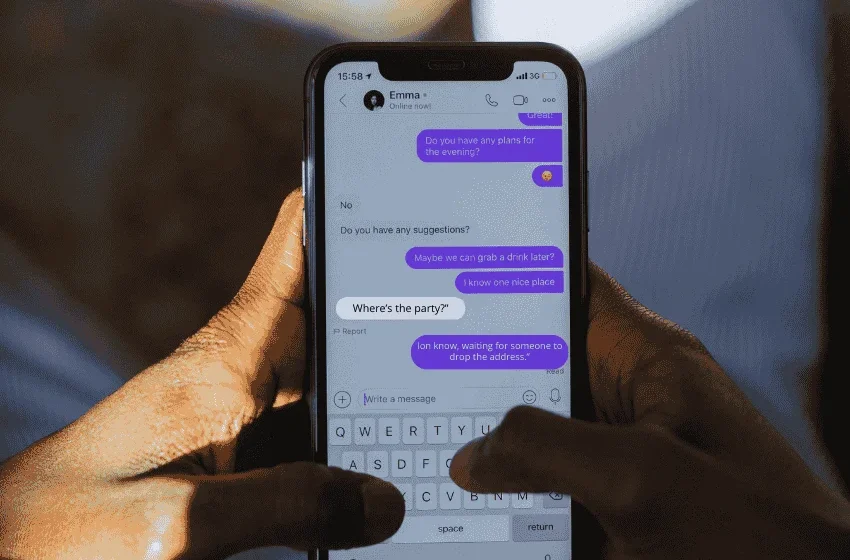
The ion meaning in text is usually “I don’t.” People use it as an informal, sound-based spelling of the phrase. For example, “ion know” means “I don’t know,” while “ion wanna go” means “I don’t want to go.” You may see it in text messages, social media comments, captions, and direct messages. It can make a message sound relaxed, personal, or more like spoken conversation.
There is another meaning to know, too. When written as “ION,” the letters can stand for “in other news,” a phrase people use to change the subject. The word also has a scientific meaning in chemistry. So, how do you know which meaning someone intends? The answer is to look at the sentence and the situation. This guide explains the common meanings of ion, shows you how people use it, and helps you avoid confusing it with similar slang.
What Does Ion Mean in Text?
In everyday texting, ion usually means “I don’t.” It is a phonetic spelling, which means it represents how a phrase sounds when people say it quickly in casual speech.
Instead of typing “I don’t know,” someone might write “ion know.” Instead of writing “I don’t care,” they might say “ion care.” The meaning stays almost the same, but the spelling gives the message a more informal voice.
Here are some common examples:
| Text slang | Meaning in standard English |
| Ion know | I don’t know |
| Ion care | I don’t care |
| Ion want that | I don’t want that |
| Ion wanna go | I don’t want to go |
| Ion like it | I don’t like it |
| Ion think so | I don’t think so |
| Ion remember | I don’t remember |
| Ion feel like it | I don’t feel like it |
The word is not usually an acronym in this use. Its letters do not each stand for a separate word. Instead, the spelling represents a casual pronunciation of “I don’t.”
For example:
Friend: “Do you know when the movie starts?”
You: “Ion know. Let me check.”
Your reply means, “I don’t know. Let me check.”
In this situation, the meaning is clear because “ion” appears before “know.” The rest of the sentence also fits the phrase “I don’t know.”
What Does Ion Mean in Slang?
As slang, ion is a casual way to express a negative statement. It can communicate uncertainty, a lack of interest, disagreement, or a decision not to do something.
The exact feeling depends on the words that follow it.
Ion Know
“Ion know” means “I don’t know.” It is useful when someone asks a question you cannot answer or when you are unsure about something.
Example:
Person A: “Who is coming to the party?”
Person B: “Ion know yet.”
Person B does not have that information yet.
Another example:
Friend: “Why did he leave so early?”
You: “Ion know, maybe he was tired.”
This is similar to saying “IDK,” but it uses a sound-based spelling rather than an initialism.
Ion Care
“Ion care” means “I don’t care.” It expresses a lack of concern or interest in something.
Example:
Friend: “Which team do you think will win?”
You: “Ion care, I just want to watch a good game.”
Here, the person is saying that they do not have a strong preference about the winner.
However, “ion care” can sound dismissive in some situations. If someone is sharing something important and receives “ion care” as a reply, they may feel that the sender is ignoring their feelings. Context and tone matter.
Ion Wanna
“Ion wanna” means “I don’t want to.” The word “wanna” is itself an informal spelling of “want to.”
Example:
Friend: “Let’s go out tonight.”
You: “Ion wanna go out. I’m too tired.”
The message means that you do not feel like going out.
This expression is common in relaxed conversations about plans, activities, food, and other everyday choices.
Ion Think So
“Ion think so” means “I don’t think so.” People use it to express doubt or disagree with an idea.
Example:
Friend: “Do you think the store is still open?”
You: “Ion think so. It usually closes at 9.”
The person believes the store is probably closed, but the wording leaves room for uncertainty.
Ion Feel Like It
“Ion feel like it” means “I don’t feel like it.” It often explains why someone does not want to do something at that moment.
Example:
Friend: “Want to play another round?”
You: “Ion feel like it rn.”
Here, “rn” means “right now.” The complete message means, “I don’t feel like it right now.”
This can be a simple way to express your mood without giving a long explanation.
Why Do People Write “Ion” Instead of “I Don’t”?
People use ion because informal writing often follows the way people speak. In fast, casual speech, the sounds in “I don’t” can blend together. Writing “ion” captures that pronunciation in a short, recognizable form.
This is not the same as accidentally misspelling a word. For people who use this spelling as part of their everyday communication, it is a deliberate style choice.
Think about other informal spellings you may already know:
- Gonna: Going to.
- Wanna: Want to.
- Lemme: Let me.
- Finna: A form used to express an intention or something about to happen.
- Tryna: Trying to.
These forms do not all work in exactly the same way, but they show how casual writing can reflect spoken language.
Ion also gives a message a particular voice. Compare these examples:
Standard: “I don’t know what happened.”
Casual: “Ion know what happened.”
Both communicate uncertainty. The second version sounds more like informal conversation and may feel more natural to someone who regularly uses this style.
People do not always choose slang to save time. They may use it because it matches their personality, their community, or the tone they want to express.
Where Did Ion Slang Come From?
The slang use of ion is rooted in African American English, also known as African American Vernacular English (AAVE). It reflects a pronunciation of “I don’t” that has been represented in informal writing.
The spoken form and the written spelling are not the same thing. The pronunciation has roots in speech, while the spelling “ion” became visible in internet writing. Historical examples show that this use was appearing online during the 2000s, before the rise of modern short-video platforms. Social media, online conversations, and music later helped more people encounter it.
The Role of Social Media
Social media makes informal language easy to share. A phrase used in one conversation can appear in comments, memes, videos, and captions. As people see it in different places, they may begin to understand and use it themselves.
Ion appears in casual digital conversations, including:
- Text messages between friends.
- Instagram comments and direct messages.
- Snapchat chats.
- TikTok comments and captions.
- Group chats and online communities.
- Posts about music, relationships, and everyday life.
Not every person or community uses ion in the same way. Some people recognize it immediately, while others may be more familiar with standard spellings such as “I don’t” or abbreviations such as “IDK.”
Ion and Cultural Context
Because this spelling comes from African American English, its background is worth understanding. AAVE is a language variety with its own patterns and history, not simply a collection of internet slang terms.
People encounter slang across communities, and language naturally spreads. Still, it is helpful to understand where a phrase comes from instead of treating it as a random trend or a mistake.
If ion is part of the way you naturally speak or communicate, you can use it in settings where it fits. If you are unfamiliar with the style, pay attention to how people use it rather than forcing it into every message.
The goal is to communicate naturally and respectfully.
What Does ION Mean in All Caps?
When written in all capital letters, ION can mean “in other news.” This is a different use from the slang spelling of “I don’t.”
People use “in other news” to introduce a new subject, often after discussing something unrelated. It works much like “on another note,” “anyway,” or “by the way.”
For example:
Friend: “That exam was harder than I expected.”
You: “ION, did you see the new movie trailer?”
In this example, ION signals a change of subject. The speaker moves from talking about an exam to asking about a movie.
Here is another example:
“Work was exhausting today. ION, I’m going on vacation next week.”
The second sentence introduces a new topic.
How to Tell the Two Meanings Apart
Use the sentence structure to help you decide.
| Example | Likely meaning |
| “ion know what to do” | I don’t |
| “ion care anymore” | I don’t |
| “ION, did you see the game?” | In other news |
| “ION, one more thing before I go” | In other news |
Capitalization can provide a clue, but it is not a perfect rule. People sometimes capitalize the first word of a message automatically, and others type everything in lowercase.
The stronger clue is how the word works in the sentence. If ion comes directly before a verb, as in “ion know,” it usually means “I don’t.” If ION introduces an unrelated subject, it may mean “in other news.”
In everyday slang conversations, the “I don’t” meaning is the one you are more likely to encounter.
What Does Ion Mean on Snapchat, Instagram, and TikTok?
The basic meaning of ion usually stays the same across social media platforms. It most often means “I don’t,” but the surrounding conversation can affect how it sounds.
Ion Meaning on Snapchat
On Snapchat, ion often appears in quick messages and casual chats. Someone may use it to explain what they know, how they feel, or whether they want to do something.
Example:
You: “Are you going to the game?”
Friend: “Ion know yet.”
Your friend has not decided or does not have enough information to answer.
If someone sends “ion care,” the phrase may express indifference. Whether it sounds playful or dismissive depends on the situation.
Ion Meaning on Instagram
On Instagram, ion can appear in comments, captions, stories, and direct messages. People may use it when sharing an opinion or reacting to something.
Example:
Comment: “ion think this song gets enough love.”
This means, “I don’t think this song gets enough love.”
You may also see ion in humorous posts or captions that reflect a person’s mood.
Ion Meaning on TikTok
TikTok comments and captions often use informal spellings and expressions. Ion can appear in reactions to videos, jokes, relationship stories, and everyday situations.
Example:
“ion even know what I just watched 😂”
The writer means, “I don’t even know what I just watched.” The phrase may express confusion, surprise, or amusement.
The emoji adds another clue about the tone, but the meaning still comes from the sentence.
Ion in Group Chats
In group chats, ion can make messages shorter and more conversational.
Example:
Person A: “Who is bringing snacks?”
Person B: “Ion know, ask Sam.”
Person B does not know who is bringing snacks and suggests asking someone else.
In a group with people who are unfamiliar with the slang, writing “I don’t know” may prevent confusion. Choose the form that best suits the people you are talking to.
Ion vs. IDK, IDC, and Other Similar Slang
Ion is often used to express the same ideas as other texting terms. However, there are differences in spelling, tone, and how each expression fits into a sentence.
| Slang | Full meaning | Example |
| Ion | I don’t | “Ion want to leave.” |
| IDK | I don’t know | “IDK where she went.” |
| IDC | I don’t care | “IDC which movie we watch.” |
| IKR | I know, right? | “IKR, that was hilarious.” |
| IMO | In my opinion | “IMO, the first one was better.” |
| NGL | Not gonna lie | “NGL, I’m tired.” |
| FR | For real | “FR, that was surprising.” |
| Nah | No | “Nah, I’m good.” |
Ion vs. IDK
IDK is short for “I don’t know.” It is an initialism formed from the first letters of the words.
Ion is a sound-based spelling of “I don’t.” It can be used before different verbs, such as “know,” “care,” “want,” and “think.”
Compare these examples:
“IDK what happened.”
“Ion know what happened.”
“IDK if I’m going.”
“Ion think I’m going.”
The first and second examples communicate the same basic idea. The fourth uses ion as part of a different negative statement.
Ion vs. IDC
IDC means “I don’t care.” It is a direct abbreviation of the complete phrase.
Ion can express the same idea when followed by “care.”
Example:
“IDC what we eat.”
“Ion care what we eat.”
Both mean that the speaker has no strong preference. The tone depends on the context, not only on the letters.
Ion vs. Nah
“Nah” is an informal way to say no. It often works as a short answer, while ion usually appears as part of a longer sentence.
Example:
Friend: “Want to come shopping?”
You: “Nah, ion feel like going out.”
The reply means no, because the speaker does not feel like going out.
Ion vs. ION
The difference between these two forms is not always capitalization alone. Lowercase ion commonly means “I don’t,” while uppercase ION can stand for “in other news.”
For instance:
“ion know what happened” means “I don’t know what happened.”
“ION, I forgot to tell you something” introduces a new topic.
When you are unsure, read the whole sentence instead of relying only on capital letters.
Is Ion Rude or Disrespectful?
Ion is not automatically rude. It is an informal spelling, and its meaning depends on the words that follow it.
“Ion know” is often a simple way to say that you do not know something. “Ion wanna go” expresses that you do not want to go. Neither phrase is automatically disrespectful.
However, some expressions can sound harsh in certain situations.
When Ion Sounds Neutral
Friend: “Do you know where my bag is?”
You: “Ion know, sorry.”
The answer is a casual way to admit that you do not know.
When Ion Can Sound Dismissive
Friend: “I was really upset about what happened yesterday.”
You: “Ion care.”
This reply may sound hurtful because it dismisses the other person’s feelings. The problem is the message itself, not simply the slang spelling.
If you want to sound kinder, you could say, “I’m sorry you’re dealing with that, but I don’t know what to say.”
How Emojis and Punctuation Affect the Tone
Emojis and punctuation can add emotional clues to a message.
- “ion know 😂” may suggest amusement or playful confusion.
- “ion care 🙄” may sound dismissive or annoyed.
- “ion know tbh” may sound honest or uncertain.
- “ion wanna go 😭” may express reluctance in a playful way.
These are possible interpretations, not fixed meanings. Different people use emojis in different ways, so it is best to consider the full conversation.
Is Ion a Real Word or Just a Typo?
In casual texting, ion is a recognized slang spelling of “I don’t.” It is not necessarily a typo just because it differs from standard written English.
People often use informal spellings to represent the way they speak. This can make a message feel more relaxed or reflect a particular style of communication.
However, ion also has a separate standard meaning in science. In chemistry, an ion is an atom or molecule with an electrical charge because it has gained or lost electrons. That definition is unrelated to the texting slang.
The sentence usually tells you which meaning is intended.
Texting example: “ion know why she left.”
Meaning: “I don’t know why she left.”
Science example: “A sodium ion has a positive charge.”
Meaning: A charged particle is being discussed.
Neither meaning is wrong in its proper setting. The important thing is to recognize the context.
When Should You Use Ion?
Ion is best suited to informal communication with people who understand the slang.
You might use it in:
- Casual texts with friends.
- Group chats.
- Social media comments.
- Direct messages.
- Funny captions and memes.
- Informal conversations about plans or opinions.
For example, “ion feel like cooking tonight” works in a casual chat with a friend. It communicates your mood without sounding formal.
When to Avoid Using Ion
In professional or academic settings, standard wording is usually the better choice. Use “I don’t” in work emails, school assignments, job applications, and formal messages.
For example:
Casual: “Ion know if I can make it.”
Professional: “I am not sure whether I will be able to attend.”
The second version is clearer and more suitable for a formal situation.
You should also consider your audience. If the person reading your message does not know the slang, they may misunderstand it. In that case, using standard English is a simple way to avoid confusion.
There is no need to use ion just because it appears in popular posts or messages. Use language that feels natural to you and fits the conversation.
Common Mistakes to Avoid When Reading Ion
Understanding ion is easy once you know the main meanings, but a few common mix-ups are worth remembering.
Mistake 1: Assuming Ion Always Means “I Don’t”
The “I don’t” meaning is common, but ION can also mean “in other news.” In science, ion has a completely different definition.
Always consider the subject of the conversation.
Mistake 2: Treating It as an Acronym
In its slang use, ion does not normally stand for three separate words. It represents how “I don’t” can sound in casual speech.
This makes it different from terms such as IDK, where each letter represents a word.
Mistake 3: Thinking It Always Shows Anger
“Ion care” may sound dismissive, but “ion know” can be a neutral statement. Do not assume that the sender is angry just because they use ion.
Look at the complete message and the situation.
Mistake 4: Relying Only on Capitalization
ION in uppercase may mean “in other news,” but capitalization is not a guaranteed signal. Some people use capital letters at the start of sentences automatically.
The sentence structure and the topic offer better clues.
Mistake 5: Using It in Every Situation
Slang can make casual messages feel natural, but it may not suit every audience. Use standard spelling when you need to be especially clear or professional.
The best communication style is one that your reader can understand easily.
Frequently Asked Questions
What does ion mean in text?
Ion usually means “I don’t” in texting and online slang. It is a sound-based spelling of the phrase used in casual speech. For example, “ion know” means “I don’t know,” and “ion care” means “I don’t care.”
What does “ion know” mean in a text?
“Ion know” means “I don’t know.” Someone might use it when they are unsure about something or cannot answer a question. For example, “ion know what time the store closes” means “I don’t know what time the store closes.”
What does ION mean on Snapchat or TikTok?
On Snapchat and TikTok, ion usually means “I don’t.” You may see phrases such as “ion wanna go,” “ion care,” or “ion even know.” In some messages, uppercase ION can mean “in other news,” so the surrounding sentence helps determine the intended meaning.
Is ion the same as IDK?
Not exactly. IDK stands for “I don’t know,” while ion is a casual spelling of “I don’t” that can be used with different verbs. For example, “ion care” means “I don’t care,” but IDK does not have that meaning.
What does ION mean in all caps?
ION can stand for “in other news” when someone uses it to introduce a new subject. For example, “ION, did you watch the game?” means “In other news, did you watch the game?” However, capitalization alone does not guarantee this meaning. Context is the best clue.
Conclusion
The meaning of ion in text is usually “I don’t.” It is an informal spelling that reflects the way the phrase sounds in casual speech. You may see it in messages such as “ion know,” “ion care,” and “ion wanna go.” It is common in casual online communication and can express uncertainty, disinterest, or reluctance. The separate meaning “in other news” is also useful to recognize, especially when ION appears at the beginning of a sentence and introduces a new topic.
The easiest way to understand ion is to read the complete message and consider the conversation. If the word appears before a verb, it probably means “I don’t.” If it introduces an unrelated subject, it may mean “in other news.” Remember that the word also has a scientific definition, so context matters. Use ion in casual conversations when it fits your style, and choose standard English in formal situations where clarity is important.
Explore more on Celeb Snips.