
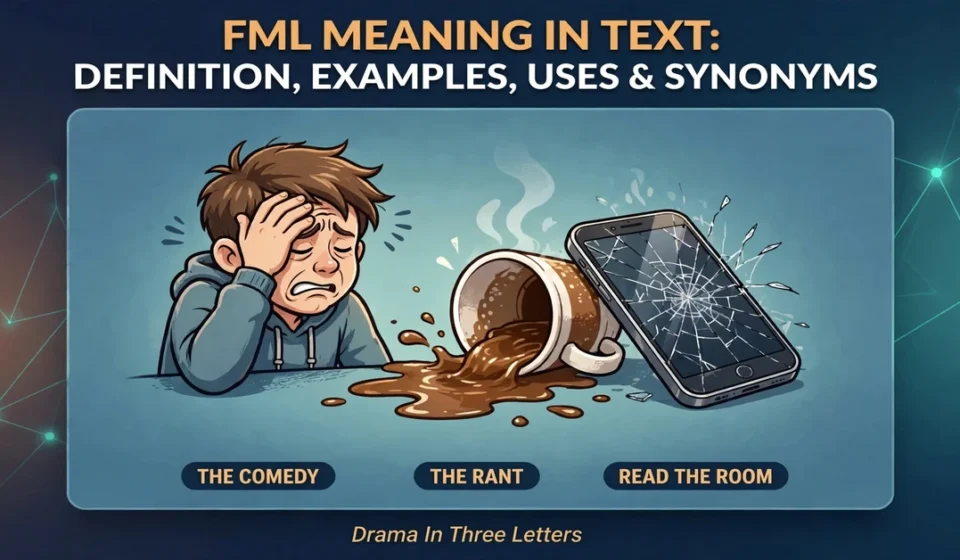

Missed the bus. Spilled coffee down your favorite shirt. Walked into a glass door in front of your crush. Your phone autocorrected “definitely” to “defiantly” in a text to your boss. It is 9:15 in the morning and the universe has already filed a complaint against you. There is exactly one text that captures all of it: “FML.”
FML stands for “f*** my life.” Before you flinch — it is almost never literal. In texting, FML is dramatic shorthand for frustration: a comedic facepalm in three letters, used when something goes wrong and a full rant feels like too much effort. It is part vent, part joke, and entirely relatable.
In this guide, we will unpack the full FML meaning in text: where it came from (including the website that made it famous), the many flavors it comes in, how to use it without alarming anyone, when it crosses from funny to serious, and what to say when a friend drops one on you.
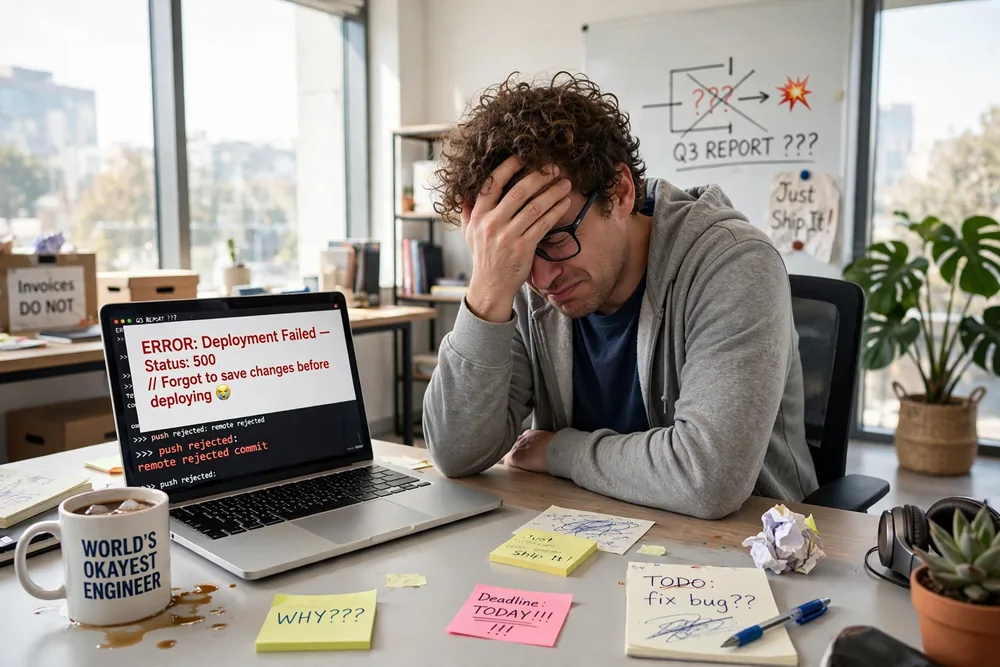
What Does FML Mean in Text?
The literal expansion: FML = “f*** my life.” The actual meaning in conversation:“Something just went wrong and I need everyone to know how dramatically wrong it went.”*
It is an emotional exclamation mark, not a philosophical statement. Nobody typing FML after locking their keys in the car is making a claim about their existence — they are performing a tiny, funny tragedy for an audience of one or more. The humor comes from the gap between the catastrophic phrase and the usually minor disaster.
FML typically appears in one of two positions:
- After the story: “Missed my alarm, spilled coffee, and it’s raining. FML.” — the punchline to your own bad luck.
- Standing alone: “FML.” — sent as its own message when the disaster speaks for itself (or when you are too annoyed to type the details).
The standalone FML is a conversation starter disguised as a cry for help. It practically begs the reply “omg what happened” — which is, of course, the entire point.
Why Three Letters Work So Well
FML is efficient in a way a rant can never be. Typing out “I am so frustrated because everything today has gone wrong” takes effort and sounds whiny. “FML” takes a second and sounds funny. It converts complaining — socially risky — into comedy — socially rewarded. That alchemy is why it survived while a thousand other venting acronyms did not.
Where FML Came From
FML was born in the early-200s internet, in the forums and chatrooms where dramatic shorthand thrived. But it became a cultural institution thanks to one website: FMyLife.com, launched in 2008.
The concept was simple and genius. Users submitted short, anonymous anecdotes about their day, each following the same ritual format: they began with “Today,” described a humiliating or unlucky moment in two or three sentences, and ended with “FML.” Examples from the site’s golden age:
- “Today, I waved back at someone who wasn’t waving at me. FML.”
- “Today, my mom found my search history. FML.”
- “Today, I called my teacher ‘mom’ in front of the whole class. FML.”
The site exploded. Millions of readers voted on whether each story deserved its FML, turning private embarrassment into communal comedy. It proved something important: everybody’s life falls apart in small, hilarious ways, and laughing about it together feels better than suffering alone.
From there, FML escaped the website and colonized everything — tweets, texts, memes, GIFs, even merchandise. By the early 2010s it was fully mainstream: a piece of internet slang your mom might even recognize, if not use.
The Many Flavors of FML
Not all FMLs are created equal. The same three letters carry very different weights depending on what triggered them:
The Comedy FML
This is the classic — minor mishap, major drama. “Just sneezed and my AirPod flew into a puddle. FML 😂” The laughing emoji is the tell: this person is amused at their own misfortune and wants you to be too. Comedy FMLs are social currency; the better the disaster story, the better the FML lands.
The Self-Deprecating FML
Here the disaster is the sender’s own fault, and they know it. “Studied the wrong chapter all night. FML.” There is no one to blame but themselves, so the acronym becomes a preemptive strike — roasting yourself before anyone else can. It is disarming and usually gets sympathy laughs.
The Genuine Frustration FML
Sometimes the mask slips and the FML is real. “Third rejection email this week. FML.” No emoji, no joke, just weariness. The phrase is the same but the temperature is different — this is someone actually overwhelmed, using humor’s clothing to say something vulnerable.
The Hyperbolic FML
The disaster is trivial but the reaction is operatic: “They discontinued my favorite chips. FML.” Everyone knows the chips are not a real tragedy. The comedy is the point — treating a snack like a catastrophe is funny precisely because it is absurd.
The Sympathy FML
Sent on someone else’s behalf: “My sister’s flight got cancelled twice. FML for her.” It is empathy in acronym form — co-signing another person’s bad day.
Learning to tell these apart matters, because each one wants a different response. Laugh at the comedy FML. Commiserate with the genuine one. The emoji — or its absence — is usually your guide.
How to Use FML in Texts
The grammar of FML is simple, but the comedy timing is everything. Here are the native patterns:
The disaster report:
- “Locked myself out. Again. FML.”
- “Printer jammed ten minutes before the deadline. FML.”
- “Sent the meme to my boss instead of my friend. FML 💀”
The escalating list:
- “Missed the bus, forgot my wallet, and now it’s pouring. FML.”
- The rule of three makes it funnier — one mishap is sad, three is a sitcom.
The ironic understatement:
- “My day is going great. FML.” — where the sarcasm does all the work.
The group-chat bomb:
- Drop a lone “FML” and let the “WHAT HAPPENED” replies roll in. It is engagement bait, and it works every time.
Timing tips: FML lands best immediately after the disaster — it is a reaction, not a reflection. A week-old FML is just complaining. And one FML per disaster: doubling up (“FML FML”) reads as genuinely distressed rather than funny, so save the double for when you mean it.
Reading the Room: Funny vs. Serious
This is the most important skill in the FML universe, because the same letters can be a joke or a red flag. Here is how to tell:
Signs it is funny: laughing or skull emojis (😂 💀), a clearly minor mishap, self-deprecating tone, sent to a group chat, followed by the sender laughing at themselves. “FML” + 😂 = comedy, always.
Signs it might be serious: no emoji, a genuinely heavy situation (job loss, breakup, health scare), sent late at night one-on-one, a pattern of FMLs with no jokes attached, or language like “I can’t do this anymore” nearby. A bare “fml.” lowercase with a period, after real bad news, deserves a check-in, not a laugh react.
The gray zone: most FMLs live here — real annoyance wrapped in humor. “Failed the exam I studied all month for. FML.” is genuinely upsetting and genuinely funny at the same time. The right response acknowledges both: “Ugh, that’s brutal 😭 you’ll crush the retake.”
When in doubt, err on the side of caring. A sympathetic reply to a joke costs you nothing; a laugh react to someone’s real distress costs a lot. If someone’s FMLs start sounding less funny over time, that shift itself is worth noticing.
FML Across Platforms
X (Twitter): FML is a quote-tweet natural — “FML” under a disastrous news headline, or as the entire text of a tweet about your day. Brevity is the platform’s love language, and FML speaks it fluently.
TikTok: FML lives in captions (“POV: Monday. FML”), in comments on fail videos, and as on-screen text in storytime videos. The visual format supercharges it — watching the disaster happen makes the three letters hit harder.
Instagram: Story-text FMLs over photos of the mishap (the spilled coffee, the parking ticket) turn bad luck into content. It is performative, but that is the point — shared suffering gets replies.
Memes: FML is a reaction-image caption, a GIF search term, and a punchline format. The “This is fine” dog might as well be sponsored by FML.
Merch: Yes, FML made it to mugs, t-shirts, and phone cases — the final stage of slang evolution. When your acronym has a gift shop, it is officially immortal.
When NOT to Use FML
Even comedy has boundaries. Keep FML out of:
Formal and professional settings. FML in a work email, a job interview, or a message to a professor is a fast track to being remembered for the wrong reasons. The swear word alone disqualifies it; the drama does the rest.
Around people who take it literally. Not everyone knows it is a joke format. Older relatives, young kids, or anyone unfamiliar with internet slang may hear “f*** my life” and genuinely worry. Read your audience.
In genuinely dark moments. If someone just shared real grief or crisis, your FML — even a sympathetic one — can sound like you are making it about you. In heavy moments, use real words: “I’m so sorry, that’s awful.”
As a constant refrain. If every text you send ends in FML, it stops being funny and starts being a personality. Save it for disasters that earn it.
When you actually need help. This is the big one. If the feeling behind the FML is real and persistent — not a spilled coffee but a sustained heaviness — the acronym is not enough. Talk to someone you trust. The joke format is for bad days, not for bad times.
How to Reply When Someone Texts FML
The right response depends on the flavor you detected:
To the comedy FML: Laugh with them. “NOOOO 😂 that’s actually tragic” or “This is the funniest thing that’s happened all week.” Matching their humor is the whole game.
To the self-deprecating FML: Reassure. “We’ve all been there, you’re fine 😭” — absolution with an emoji.
To the genuine FML: Lead with empathy. “Ugh, I’m sorry — that’s really rough. Want to vent?” Offer an ear before offering solutions.
To the hyperbolic FML: Play along. “A moment of silence for the chips 🕊️” — committing to the bit is the correct response.
To the worrying FML: Check in for real. “Hey, are you actually okay? I’m here.” If someone you care about seems persistently low, say so plainly. Caring is never the wrong move.
Frequently Asked Questions
1. What does FML mean in text messages?
FML stands for “f*** my life.” In texting, it is dramatic shorthand for frustration — used humorously when something goes wrong, like “Missed my bus and it’s raining. FML.”* It is almost never literal; it is a comedic way to vent about bad luck.
2. Where did FML come from?
FML emerged in early-2000s internet chatrooms and forums, then exploded through FMyLife.com (launched 2008), where users shared short anecdotes about embarrassing moments ending with “FML.” The site’s viral success cemented the acronym in internet culture.
3. Is FML rude or offensive?
It contains a swear word, so it is informal and not appropriate for professional, formal, or mixed-company settings. Among friends it is usually funny, not offensive. A cleaner alternative is saying the letters while meaning “forget my life,” or using 🤦 / SMH instead.
4. How can I tell if someone’s FML is serious?
Check the emojis and the situation. Laughing or skull emojis (😂 💀) with a minor mishap = comedy. No emoji with genuinely heavy news, late-night one-on-one messages, or a pattern of joyless FMLs = possibly serious and worth a caring check-in.
5. What should I reply when someone texts “FML”?
Match the flavor: laugh with comedy FMLs (“NOOOO 😂”), reassure self-deprecating ones (“we’ve all been there”), empathize with genuine ones (“that’s rough, want to vent?”), and check in sincerely if it seems like more than a joke.
Conclusion
The FML meaning in text is one of the internet’s great inventions: three letters that turn life’s small disasters into shared comedy. Born in chatrooms, raised by a website of anonymous misfortune, and now fluent on every platform, it works because it tells the truth — everybody’s day falls apart sometimes, and laughing about it beats suffering alone.
Just remember the two rules that keep it working: read the room before you laugh, and check in when the joke stops sounding like a joke. Used with that much care, FML is exactly what it was always meant to be — proof that even your worst moment can get a laugh. FML, indeed.