


Questions about Gordon Ryan‘s age, career, and jiu-jitsu success usually lead to the same answer: he is one of the most accomplished no-gi grapplers of his generation. Born on July 8, 1995, Ryan built his reputation through major submission–grappling victories, ADCC world titles, and a highly technical style developed under John Danaher.
He is known for pressure passing, leg locks, back attacks, and a careful approach to positional control. His public profile is also shaped by his outspoken personality, health-related absences, and debates over whether his competitive record places him among the best jiu-jitsu athletes ever.
Gordon Ryan at a Glance
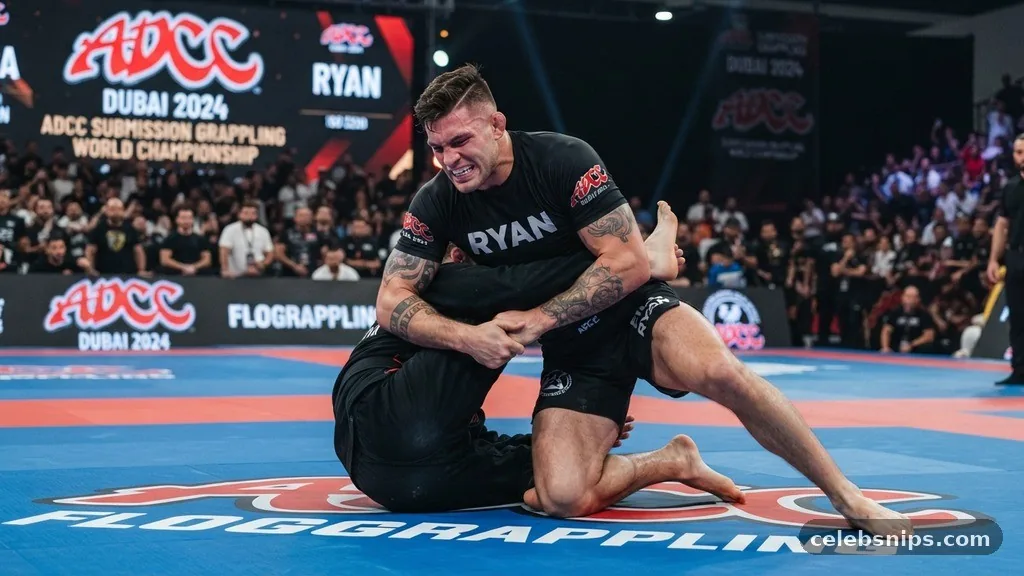
Gordon Ryan is an American professional submission grappler who specializes in no-gi Brazilian jiu-jitsu. Unlike athletes who focus mainly on the gi, he competes without the traditional uniform, which changes how grips, passing, takedowns, and defensive systems work.
His most important achievements came at the ADCC Submission Fighting World Championship, widely regarded as one of the leading events in no-gi grappling. Ryan won ADCC titles in 2017, 2019, and 2022, including absolute-division success in 2019 and 2022.
| Fact | Publicly reported information |
|---|---|
| Full name | Gordon Ryan |
| Date of birth | July 8, 1995 |
| Age | 30 before July 8, 2026; 31 from July 8, 2026 |
| Birthplace | Monroe Township, New Jersey, according to widely published biographical accounts |
| Nationality | American |
| Profession | Professional submission grappler, instructor, and online educator |
| Known for | ADCC titles, no-gi jiu-jitsu, submission grappling, and instruction under John Danaher |
| Black belt | Brazilian jiu-jitsu black belt awarded under John Danaher |
| Competitive focus | No-gi grappling and submission-only or submission-focused competition |
| Net worth | No reliable public figure confirms an exact amount |
Some online profiles list measurements such as height, weight, or detailed career records, but those figures can vary by event and time. His competition weight has changed as he has moved between divisions, so a single number should not be treated as permanent.
How Old Is Gordon Ryan?
Gordon Ryan was born on July 8, 1995, which makes him 30 years old before his birthday in 2026. He turns 31 on July 8, 2026. That date is more useful than a static age because a public figure’s age changes every year.
Ryan entered elite grappling unusually early relative to the level he later reached. He was still in his twenties when he won his first ADCC world title in 2017, and he remained a leading open-weight competitor through the 2019 and 2022 editions of the tournament.
His age also matters in the context of athletic development. Submission grappling rewards timing, technical knowledge, positional patience, and physical preparation, so elite competitors may remain effective across a long period even as their training volume or competition schedule changes.
Ryan’s public career has included periods of intense competition as well as periods when illness and injury affected his availability. Those interruptions make simple comparisons with athletes who compete every year less reliable.
Early Life and Start in Jiu-Jitsu
Ryan grew up in New Jersey, where he first developed an interest in wrestling and grappling. Public accounts commonly place the beginning of his Brazilian jiu-jitsu training at about age 15, although biographies sometimes describe the timing differently.
That starting point is significant because many elite competitors begin with wrestling, judo, or another combat sport before moving into jiu-jitsu. Ryan’s wrestling background helped him understand balance, pressure, takedowns, and the importance of controlling an opponent’s hips.
He began training at the school of Garry Tonon, a prominent no-gi grappler who had also become associated with John Danaher’s New York training group. Tonon’s influence gave Ryan an early connection to the technical system that later became central to his career.
Ryan did not follow a traditional path built around a long amateur wrestling résumé followed by a gradual transition into professional grappling. Instead, his progress accelerated as he trained with increasingly advanced athletes and competed in events that exposed weaknesses in his game.
Information about Ryan’s parents, siblings beyond his well-known grappling relationship with Nicky Ryan, and childhood home life is limited in reliable public sources. His younger brother Nicky Ryan is also a high-level submission grappler, but their private family history should not be expanded beyond what they have publicly shared.
Training Under John Danaher
John Danaher became the most important technical influence in Ryan’s competitive development. Danaher’s teaching system emphasized systems rather than isolated moves, with particular attention to positional control, back exposure, leg entanglements, finishing mechanics, and decision-making.
Ryan trained at the New York academy associated with Danaher and the so-called Danaher Death Squad. The group included high-level grapplers such as Garry Tonon, Eddie Cummings, and others who helped popularize detailed no-gi systems through competition and instruction.
The value of that environment was not simply access to one coach. Ryan trained with specialists who could expose technical gaps in his passing, wrestling, defense, and submission chains. A room full of elite competitors creates a different standard from ordinary recreational training.
Ryan later became part of the team that relocated from New York to Puerto Rico and became known as New Wave Jiu-Jitsu. Danaher continued to coach the group, while Ryan developed a major teaching and leadership role within the team.
His training style is built around repetition and control. Rather than rushing for a submission from any position, he often works through a sequence: secure the takedown or top position, prevent the opponent from escaping, pass the legs, isolate a limb or expose the back, and then finish.
- Top pressure: Ryan uses body weight, frames, and positional control to limit movement.
- Passing: His passing systems target the opponent’s legs and hips before advancing toward side control or mount.
- Back control: The rear body lock, seatbelt control, and short-choke attacks are central parts of his finishing game.
- Leg attacks: He has used leg entanglements and heel-hook systems, particularly in no-gi competition.
- Strategic pacing: He often prioritizes control and incremental progress over low-percentage attacks.
Readers wanting background on the event that helped define Ryan’s career can consult the official ADCC website, which provides information about the championship’s role in submission grappling.
Career Beginnings and Rise to Elite Competition
Ryan’s early career included both victories and setbacks. That matters because the popular image of him as an unstoppable champion can hide the developmental stage in which he had to improve his wrestling, passing, and ability to perform against experienced opponents.
He gained attention through performances in high-level no-gi events before winning the ADCC 99-kilogram division in 2017. ADCC is not a standard belt-ranking tournament, and winning it requires success against competitors with different styles, body types, and tactical preferences.
The 2017 title established Ryan as a serious international contender. He was no longer simply a promising athlete from Danaher’s room; he had become a champion on one of the most respected stages in the sport.
Ryan’s development continued after that breakthrough. He added more reliable takedowns, improved his top control, and became increasingly comfortable competing against heavyweights and athletes with strong defensive wrestling.
A major part of his rise came from his ability to combine details that are often taught separately. He could threaten a leg attack, use that reaction to expose the back, and then transition into a choke or control sequence without giving the opponent a clean reset.
ADCC World Championship Success
The ADCC World Championship is the clearest measure of Ryan’s standing in submission grappling. He won the 99-kilogram division in 2017, repeated that achievement in 2019, and won again in 2022.
| ADCC edition | Division or achievement | Why it mattered |
|---|---|---|
| 2017 | 99-kilogram champion | Established Ryan as an elite international no-gi competitor |
| 2019 | 99-kilogram champion and absolute champion | Showed success in both a weight class and the open-weight field |
| 2022 | 99-kilogram champion and absolute champion | Confirmed his ability to repeat against another elite field |
| 2024 | Not a title year for Ryan | His absence or non-participation meant the event should not be counted as another Ryan championship |
The absolute division is especially important because athletes compete without the same weight limit. A lighter competitor may face a much heavier opponent, making strength, body control, energy management, and tactical efficiency critical.
Ryan’s 2019 and 2022 absolute titles gave him a stronger claim than a competitor who had won only within a single weight class. His success against larger opponents helped drive the debate over whether he was the best no-gi grappler of his era.
ADCC results should still be interpreted carefully. A championship victory proves success at a particular event and time; it does not automatically establish an undefeated lifetime record or settle every comparison with earlier champions.
Gordon Ryan’s Competitive Record and Losses
There is no single universally accepted record format for professional grappling. Different databases count matches from different promotions, omit superfights, classify exhibition contests differently, or use separate records for gi, no-gi, and submission-only events.
For that reason, claims that Ryan is undefeated should be treated cautiously. He has lost matches during his career, especially before reaching the peak of his technical development, even though his later results produced long periods of dominance.
The most useful way to assess his record is to examine the quality of his opponents and the importance of the events. Wins at ADCC, major superfights, and elite professional shows carry more context than an unsupported total copied from a profile page.
Ryan has also competed under different rules. Some events award points, some place greater emphasis on submissions, and others use overtime or special scoring systems. A competitor’s performance under one ruleset does not always predict how he will perform under another.
His reputation grew partly because he was willing to face very large opponents in absolute divisions. That choice increased the physical challenge and gave his best wins more significance, but it also makes comparisons with athletes who remained in narrower weight categories less straightforward.
The fair verdict is that Ryan has a highly decorated record, not an untouched one. His legacy rests on repeated championships and elite-level wins rather than on the claim that he has never been defeated.
Technical Style: Passing, Pressure, and Submission
Ryan’s style begins with control. He often tries to make an opponent carry his weight, restrict hip movement, and defend several connected threats instead of chasing one isolated submission.
His passing is a central feature. Passing means moving around or through an opponent’s legs to reach a stronger top position, and Ryan has used pressure, body locks, leg pummeling, and systematic movement to neutralize guards.
Once he reaches a dominant position, Ryan tends to build layers of control. He may use mount, side control, north-south control, or back exposure to force an opponent to choose between protecting one area and giving up another.
The back is particularly important in his system. A back-take sequence can lead to a rear body lock, control of the shoulders, and a rear-naked choke, but the same position can also produce arm attacks when the opponent focuses too heavily on defending the neck.
His leg-lock game also reflects the influence of Danaher and the New Wave system. Leg entanglements create submission threats around the knee and lower leg, but they also function as control positions that can force defensive reactions.
Ryan’s size and strength matter, but they do not fully explain his results. His competitive advantage comes from linking physical pressure to technical choices, preventing clean escapes, and recognizing when an opponent’s defensive movement creates a new opening.
Teaching, Instruction, and New Wave Jiu-Jitsu
Ryan’s influence extends beyond competition because he teaches through seminars, training footage, instructional products, and the New Wave Jiu-Jitsu team. His instructional work focuses on repeatable systems rather than short collections of unrelated tricks.
That approach reflects Danaher’s wider teaching philosophy, but Ryan has developed his own emphasis on pressure, body positioning, high-percentage submissions, and competition preparation. His lessons are aimed largely at serious grapplers who want to understand why a position works, not only how to perform one movement.
New Wave Jiu-Jitsu became a major part of Ryan’s professional identity after the relocation from New York to Puerto Rico. The team has been associated with high-level training, competition preparation, and the development of younger athletes.
Instructional material can also create a more durable career than competition alone. An athlete has limited opportunities to compete at the highest level, but a well-produced technical lesson can remain useful to students for years.
Ryan’s public communication style is direct and sometimes confrontational. That has helped him attract attention outside specialist grappling circles, although it has also made his public image more divisive than that of athletes who keep their comments strictly technical.
Health, Competition Schedule, and Current Status
Ryan’s career has included periods when health problems affected his training and competition plans. Public reporting and Ryan’s own statements have discussed serious medical issues, but specific diagnoses, treatment details, and long-term outcomes should not be inferred beyond what has been confirmed.
Health interruptions are particularly important in a sport built on daily physical contact. A grappler recovering from illness may need to reduce training intensity, change nutrition, adjust travel plans, or withdraw from an event even when the technical ability to win remains intact.
Ryan has also dealt with the normal pressures of an elite career: injuries, weight management, coaching responsibilities, and the difficulty of preparing for opponents with different rule systems. These factors help explain why his competition schedule has not been perfectly regular.
He should not automatically be described as permanently retired unless he makes a clear and current announcement. A period away from competition may reflect recovery, selective scheduling, or preparation for a particular event rather than the end of his career.
The safest description is that Ryan remains a major figure in professional jiu-jitsu and submission grappling, while his exact future competition plans depend on health, training, and event decisions.
Personal Life, Height, and Net Worth
Ryan’s public professional life is well documented, but many personal details are not. Reliable sources do not establish a complete account of his parents, broader family background, private residence, or every relationship claim that appears online.
Nicky Ryan is publicly known as his brother and as a high-level grappler in his own right. Their shared connection to competitive jiu-jitsu is relevant to Ryan’s public biography, while private family matters should not be filled in with speculation.
Height figures are commonly listed around 6 feet 2 inches, but online profiles are not always consistent. Competition weight is even less stable because Ryan has competed in different divisions and his body weight changes during training and preparation.
No authoritative public source confirms Gordon Ryan’s exact net worth. Online estimates should not be treated as verified because private assets, taxes, expenses, instructional sales, sponsorship terms, business ownership, and event purses are not fully disclosed.
His likely professional income sources include several career-linked areas:
- Competition purses and appearance fees from professional grappling events.
- Instructional courses, seminars, and educational products.
- Team-related coaching and training activities.
- Sponsorships, equipment partnerships, and promotional agreements.
- Media, online video, and other commercial projects connected to jiu-jitsu.
Those categories explain how a leading grappler may earn money, but they do not support a precise personal fortune. Any article presenting an exact figure without transparent documentation is making a stronger claim than the available evidence allows.
Is Gordon Ryan the Best Jiu-Jitsu Competitor Ever?
There is no official ranking that can settle the question permanently. The answer depends on whether “best” means the most successful no-gi competitor, the greatest overall Brazilian jiu-jitsu athlete, the most influential teacher, or the most dominant athlete during a particular period.
Ryan has one of the strongest cases for the first category. His repeated ADCC 99-kilogram titles, absolute championships, and success against elite opponents place him among the most accomplished no-gi competitors in modern history.
The broader comparison is harder because gi competitors, earlier champions, and athletes from different generations faced different rules and competitive environments. A champion who dominated under one ruleset cannot be measured by the same simple scale as someone whose career centered on another.
Supporters point to Ryan’s ability to win at both his weight and absolute divisions. Critics may point to losses, periods away from competition, or the limits of comparing modern submission grappling with the history of gi-based Brazilian jiu-jitsu.
A balanced conclusion is that Ryan is unquestionably one of the leading no-gi grapplers of his era. Calling him the single greatest jiu-jitsu athlete ever is a matter of definition and judgment, not an established fact.
Frequently Asked Questions
How old is Gordon Ryan?
Gordon Ryan was born on July 8, 1995. He is 30 before July 8, 2026, and turns 31 on that date.
What age did Gordon Ryan start jiu-jitsu?
Public biographical accounts generally place the start of his Brazilian jiu-jitsu training at about age 15. He had an early connection to wrestling and later trained under Garry Tonon and John Danaher.
What is Gordon Ryan known for?
He is known for elite no-gi submission grappling, multiple ADCC world championships, pressure passing, back control, leg attacks, and his role as a competitor and instructor with New Wave Jiu-Jitsu.
What belt is Gordon Ryan?
Gordon Ryan is a Brazilian jiu-jitsu black belt. John Danaher awarded him his black belt, and Ryan’s competitive career has primarily focused on no-gi grappling rather than gi tournaments.
Has Gordon Ryan ever lost a fight?
Yes. Ryan has lost grappling matches during his career, particularly before reaching his later period of dominance. The exact career record varies by database and ruleset, so claims that he is completely undefeated are not reliable.
Final Takeaway
Gordon Ryan’s age, career, and jiu-jitsu success make sense when viewed as a progression from teenage training in New Jersey to technical development under Garry Tonon and John Danaher, followed by repeated ADCC success. His strongest evidence of greatness is concrete: major no-gi titles, absolute-division victories, and sustained influence as a teacher.
Questions about his current plans, exact record, height, health, and net worth deserve careful wording because public information is incomplete or changes over time. The clearest conclusion is that Ryan remains one of the defining competitors in modern submission grappling, and his future work in competition and instruction will continue to shape that legacy.