


Forrest Frank is an American Christian singer, songwriter, producer, and multi-instrumentalist whose rapid rise has made his age, career, family, and music frequent search topics. Born on April 8, 1995, he was 30 years old as of April 8, 2025, and became widely known through songs such as “Good Day,” “Up!,” and “No Longer Bound.”
His career combines independent production, social-media distribution, gospel themes, hip-hop, pop, and contemporary Christian music. The story behind Forrest Frank’s age, career, and music success is especially notable because he built momentum as a creator and collaborator before becoming one of the most visible names on the Christian charts.
Forrest Frank at a Glance
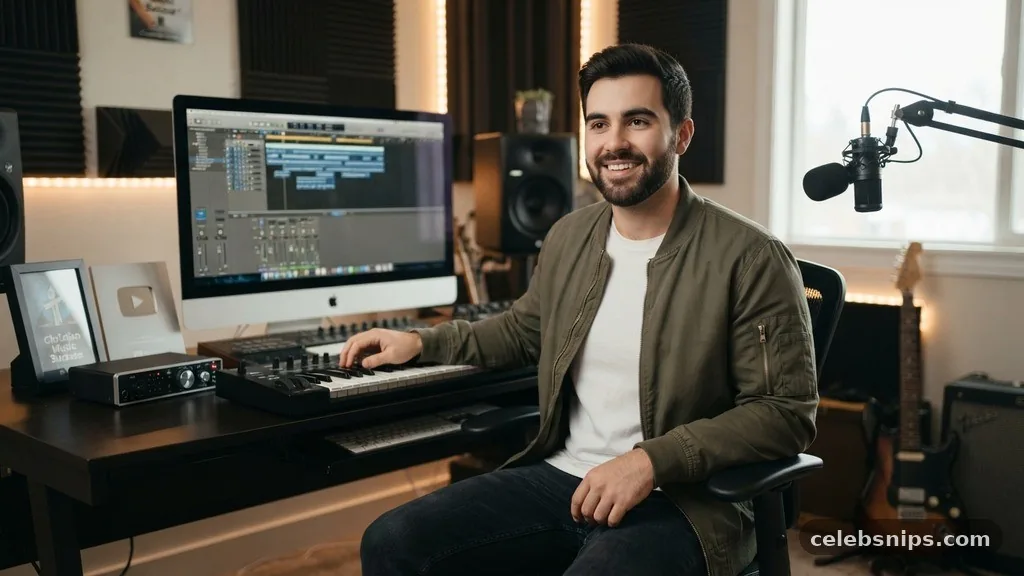
Forrest Frank’s public identity is closely tied to his work as a Christian recording artist, but his career began with broader creative interests. He has written, produced, performed, and released music rather than relying only on a traditional label-led path.
| Detail | Publicly reported information |
|---|---|
| Professional name | Forrest Frank |
| Birth date | April 8, 1995 |
| Age | 30 as of April 8, 2025; age changes annually |
| Nationality | American |
| Profession | Singer, songwriter, producer, and musician |
| Main genre | Contemporary Christian music with hip-hop, pop, gospel, and R&B influences |
| Known for | “Good Day,” “Up!,” “No Longer Bound,” and the album CHILD OF GOD |
| Spouse | Publicly known as Hannah Frank; detailed personal information is limited |
| Grammy status | Won Best Contemporary Christian Music Performance/Song for “Good Day” at the 2025 Grammy Awards |
His birth date is widely reported as April 8, 1995, but readers should remember that age is a moving figure. A biography written before April 8, 2025, would correctly list him as 29, while a current reference after that date should list him as 30.
Some online biography pages add details about education, relatives, income, or physical measurements without showing strong sourcing. Those claims should not automatically be treated as established facts. Frank’s music and public career are well documented; many private details are not.
How Old Is Forrest Frank?
Forrest Frank was born on April 8, 1995, which makes him 30 years old as of April 8, 2025. His birth year places him in the generation of artists who developed their audiences through streaming platforms, short-form video, direct fan engagement, and independent digital releases.
The date matters because many searches for “Forrest Frank age” produce conflicting numbers. The disagreement usually comes from pages that were not updated after his birthday, not from a confirmed dispute over his birth year. The safest way to state his age is always to include the relevant date.
Publicly available biographical information identifies him as American. His exact birthplace is less consistently documented in authoritative public profiles, so it should not be presented as certain without a reliable primary source.
Frank’s age also provides useful career context. By his late twenties, he had moved from producing and releasing music independently to leading a major Christian-music breakthrough, which is unusually fast compared with artists who spend many years building a conventional album catalog.
His public image is youthful, energetic, and highly online, but his work is not limited to casual internet singles. He has released full projects, worked with established Christian artists, and developed a recognizable sound that connects worship language with contemporary beat-driven production.
Early Life, Faith, and Musical Background
Forrest Frank has spoken publicly about Christian faith as a central part of his life and music. His songs commonly address prayer, gratitude, salvation, personal change, and trust in God rather than treating faith as a minor theme added to otherwise secular material.
Details about his parents, siblings, and childhood are not presented consistently enough across reliable public sources to support a complete family biography. That limitation is important: a search result that names a relative does not necessarily establish the relationship, particularly when the claim is copied across unsourced celebrity pages.
His development as a musician appears to have involved more than singing. Frank is associated with production, songwriting, arranging, recording, and instrumental performance, skills that gave him control over the sound and release process. That ability helped him create music at a pace that suited digital audiences.
Before his biggest Christian hits, Frank released music connected to pop, hip-hop, and independent online culture. He also became known for collaborations and for making songs that could travel through social platforms without depending entirely on traditional radio promotion.
His early work is useful for understanding the later success of CHILD OF GOD. The album did not emerge from nowhere. It followed years of experimentation with melodies, beats, vocal textures, and concise song structures that could work both as complete tracks and as short clips.
Education details are often repeated online, including claims about attendance at Baylor University. However, a biography should distinguish a frequently repeated internet claim from a clearly documented educational record. Public attention has focused far more on Frank’s professional work than on a formal academic biography.
How Forrest Frank Started His Music Career
Frank’s early career developed through independent music-making and collaboration. Rather than waiting for a major label to define his audience, he used recording and production skills to release material directly, test ideas, and build relationships with other artists.
One early stage of his work involved the duo Forrest, associated with Caleb Goodwin. The project allowed Frank to explore alternative pop and electronic textures before his solo Christian releases became his main public identity. The duo period matters because it shows that his musical background was broader than the sound heard on his later worship-centered hits.
Frank also became recognized as a producer and collaborator. That role helped him understand how different artists approach vocals, songwriting, and audience connection. It also gave him a practical advantage: he could participate in the entire process instead of depending on separate producers for every release.
His independent strategy matched the changing music market. A song could reach listeners through YouTube, TikTok, streaming services, playlists, and direct recommendations long before it received traditional radio exposure. Frank’s production ability and frequent releases made that environment work in his favor.
The shift toward Christian music was not simply a change in branding. His lyrics became more direct about Jesus, the Bible, prayer, and personal faith, while his production kept the rhythmic energy associated with hip-hop and pop. That combination helped his music reach listeners who might not choose a conventional worship recording.
- Independent production: Frank’s ability to record and shape his own music supported a fast release schedule.
- Collaborative growth: Work with other vocalists and writers expanded his sound and audience.
- Digital distribution: Streaming and short-form video helped songs circulate beyond traditional Christian radio.
- Faith-centered writing: Biblical themes became central to his public artistic identity.
- Genre crossover: Hip-hop, pop, gospel, and worship elements made the music accessible to several listener groups.
His career therefore began as a combination of musician, producer, and online creator. That combination later became one of the defining features of his success.
The Breakthrough With Christian Music
Frank’s major breakthrough came after he focused more clearly on Christian music and released songs designed to communicate faith in an immediately recognizable way. His writing often uses simple, repeated phrases, but the production gives those phrases momentum and emotional lift.
“Good Day” became the clearest example of that approach. The song presents gratitude and optimism through an upbeat sound, making it suitable for personal listening, social videos, church-related content, and everyday playlists. Its accessibility helped it move beyond a narrow worship audience.
Another important track is “No Longer Bound,” which Frank recorded with Hulvey. The song centers on freedom from bondage and transformation through faith, themes that are familiar in Christian music but presented through a contemporary rap and melodic format.
“Up!” also contributed to his growing recognition. Its energetic delivery and faith-based message fit the style that listeners had come to associate with Frank: compact, direct, rhythmic, and easy to share. These releases worked together rather than functioning as isolated hits.
His breakthrough was supported by repetition and consistency. Frank released songs regularly, appeared in collaborations, and maintained a strong connection between the music and the beliefs expressed in it. Listeners could understand the message quickly, then explore the wider catalog.
The rise also illustrates the importance of audience behavior in modern Christian music. Fans do not only listen to albums from beginning to end; they share individual lines, use sounds in videos, save songs to playlists, and introduce tracks to people outside the genre. Frank’s songs were well suited to that pattern.
CHILD OF GOD and Major Songs
CHILD OF GOD became the central album of Frank’s breakthrough period. Its title summarizes the identity he presents through his music: a Christian artist writing from a personal relationship with God rather than treating faith as a market category.
The project helped establish a consistent musical world. It combines worship language with modern drums, pop hooks, rap passages, and concise arrangements. The result is not traditional gospel in a strict stylistic sense, but it clearly belongs to the larger Christian music ecosystem.
Several songs are especially important to his public profile:
- “Good Day”: An upbeat song of gratitude that became his signature mainstream Christian hit.
- “No Longer Bound”: A collaboration with Hulvey focused on spiritual freedom and transformation.
- “Up!”: A high-energy track that reflects Frank’s rap and pop influences.
- “Lift My Hands”: A worship-oriented release that shows the more devotional side of his catalog.
- “GOOD DAY” collaborations and remixes: Additional versions helped the song reach different listeners and formats.
The album’s importance is not only measured by individual streams. It gave fans a larger body of work to explore and positioned Frank as an album artist, producer, and creative director rather than someone known for one viral song.
His music also benefits from clear lyrical language. A listener does not need a detailed explanation to understand that the songs are about Christian faith, gratitude, hope, and reliance on God. That clarity has helped the tracks function in both personal and communal settings.
Frank’s vocal delivery changes according to the song. He can use a smooth melodic line for a reflective passage, then shift into a quicker rhythmic section. That flexibility allows him to move between Christian pop, contemporary worship, gospel-influenced songwriting, and hip-hop without completely abandoning his core sound.
Charts, Awards, and Recognition
Frank’s commercial rise became visible through the Billboard charts and major industry recognition. His releases reached prominent positions on Christian charts, where the performance of an album or song is measured against other releases in the faith-based market.
His recognition expanded beyond chart placement. At the 2025 Grammy Awards, Frank won Best Contemporary Christian Music Performance/Song for “Good Day,” the collaboration with Hulvey. The award confirmed that his success was not limited to social-media attention or streaming momentum.
The Grammy win was especially significant because it recognized both the recording and the songwriting or performance achievement represented by the category. Readers can verify the award through the Recording Academy’s Forrest Frank artist page.
Frank also received major attention at the Billboard Music Awards. Public coverage credited him with Christian-music honors connected to top Christian artist, top Christian album, and top Christian song categories during the period when “Good Day” and CHILD OF GOD dominated the conversation.
Chart success should still be interpreted carefully. A Billboard position reflects performance during a defined tracking period, while a Grammy represents voting by Recording Academy members. Neither measure explains every reason listeners connect with the music, but both show that Frank’s reach had become substantial.
His recognition also reflects a wider change in Christian music. Artists can now build audiences through streaming and social platforms before traditional industry institutions respond. Frank’s career shows how an independent or digitally focused release can eventually receive the same type of formal attention as a label-centered project.
Forrest Frank’s Musical Style and Influence
Frank’s sound sits between contemporary Christian music, pop, hip-hop, gospel, and worship. That mixture is not accidental. His production often uses bright melodies and strong beats, while his lyrics draw on Christian vocabulary that includes grace, prayer, freedom, praise, and identity in God.
His music is also highly conversational. Instead of relying only on abstract theological language, many songs use direct statements that resemble everyday speech. That approach makes the message easier to remember and gives listeners phrases they can repeat in videos, captions, or personal reflection.
The short-song format is another part of his influence. Modern listeners frequently encounter music through clips before hearing a full release. Frank’s strongest hooks can stand alone in a short excerpt, but they also lead into complete songs with additional verses and production changes.
Collaboration has been central to his sound. Working with artists such as Hulvey allows Frank to contrast his melodic delivery with another performer’s rap style. These partnerships also connect audiences across different parts of the Christian hip-hop and gospel community.
His approach differs from the sound associated with Elevation Rhythm, a worship collective known for youth-focused church music and live worship settings. Frank may share some contemporary Christian listeners with Elevation Rhythm, but they represent different artistic models: one is primarily an individual producer-artist, while the other is connected to a church worship movement.
The influence of Frank’s music is difficult to quantify with a single rate or statistic. Its significance can be seen in the way his songs cross between Christian playlists, viral videos, church-related content, and personal listening. He has helped make openly Christian lyrics feel natural within current pop and hip-hop production.
Personal Life, Wife, and Family Privacy
Forrest Frank is publicly associated with his wife, Hannah Frank. They have appeared together in public-facing content, and family life has sometimes been part of the broader image surrounding his music. However, detailed information about her occupation, private history, and daily life should not be stated as fact unless directly documented by a reliable source.
Online searches also ask whether Forrest Frank has children. Family-related claims circulate widely, but public biography pages do not always distinguish between verified information and copied material. A responsible account should avoid listing children, ages, or other family details without clear confirmation.
Frank’s faith and family identity are connected to his public work, but that does not make every private detail public property. His songs may discuss marriage, prayer, responsibility, or personal growth without providing a complete record of his household.
Questions about whether Frank supports LGBTQ people have also appeared in search results. His public music clearly expresses traditional Christian beliefs, but a broad political or social label should not be assigned without a specific, reliable statement that directly addresses the question.
The same caution applies to rumors and controversies. No single, well-supported controversy is necessary to explain his career, and repeating social-media claims would add noise rather than useful biography. Readers should distinguish a confirmed public statement from an interpretation of lyrics or a post taken out of context.
Net Worth, Income, and Online Presence
No authoritative public source establishes Forrest Frank’s exact net worth. Figures published by celebrity-estimate websites should be treated as speculative because they usually cannot verify private contracts, taxes, expenses, royalties, publishing ownership, investments, or business arrangements.
His likely professional income sources are connected to the work that is publicly visible. These may include streaming royalties, songwriting and publishing revenue, digital video monetization, live performances, merchandise, licensing, production work, and collaborations. The existence of an income category does not reveal how much he earns from it.
Streaming success can generate significant attention without translating directly into a known personal payout. Payments may pass through distributors, labels, publishers, co-writers, producers, and rights holders before reaching an artist. That is why a high stream count cannot be converted into an accurate net-worth figure without private financial records.
Frank maintains a visible digital presence through music platforms and social media, where he can share releases, clips, performances, and messages connected to Christian faith. Accounts should be checked through verified platform profiles or links from his official channels, since usernames and fan pages can change.
Follower counts are also time-sensitive. A number copied from an older article may be outdated within weeks, and a large account using his name is not automatically official. The most reliable information remains his verified music catalog, credited collaborations, and formally recognized releases.
For readers trying to assess Forrest Frank’s career rather than a speculative fortune, chart history and award records offer stronger evidence. Those records show public professional performance; they do not pretend to reveal private wealth.
Why Forrest Frank’s Success Matters
Frank’s success matters because it demonstrates how contemporary Christian music can grow through a blend of independent creativity and mainstream digital distribution. His songs reach listeners who may not begin with an album or a church playlist; they may first hear a chorus through a short video or recommendation.
He also illustrates the value of being a multi-role artist. Singer-songwriters who can produce, arrange, record, and market their own work have more control over timing and sound. That control can make it easier to respond quickly when a song begins to gain attention.
The cultural significance of “Good Day” lies partly in its emotional simplicity. The song does not require listeners to know Frank’s full biography before they understand its central mood. It offers an accessible message of gratitude while remaining unmistakably connected to Christian faith.
His success has also helped narrow the distance between Christian hip-hop and wider Christian pop. A song can use rap cadences, modern production, and social-media-friendly hooks while still being intended for listeners who want explicit religious content.
Frank’s career remains active, so the story is not finished. New songs, collaborations, tours, and album releases may change his chart profile and artistic direction. Any current biography should therefore separate established milestones from predictions about what he might do next.
The strongest conclusion is straightforward: Forrest Frank has become an important contemporary Christian artist because he joined technical independence, frequent digital releases, collaborative songwriting, and a clearly stated faith message. His career is more substantial than a single viral song.
Frequently Asked Questions
How old is Forrest Frank?
Forrest Frank was born on April 8, 1995. He turned 30 on April 8, 2025, so his listed age should be updated after each birthday.
What is Forrest Frank known for?
He is known for Christian songs including “Good Day,” “Up!,” and “No Longer Bound,” as well as the album CHILD OF GOD. He is also recognized as a producer and collaborator.
Did Forrest Frank win a Grammy?
Yes. Frank won Best Contemporary Christian Music Performance/Song for “Good Day” at the 2025 Grammy Awards, in connection with his collaboration with Hulvey.
Who is Forrest Frank’s wife?
He is publicly associated with Hannah Frank. Information about her private life and professional work is limited, so unsupported claims about her occupation or background should be avoided.
What is Forrest Frank’s net worth?
No authoritative source confirms an exact net-worth figure. Online estimates are speculative and do not reliably account for royalties, publishing rights, taxes, expenses, or private assets.
Final Takeaway
Forrest Frank’s age, career, and music success are best understood through the facts that can be checked: he was born on April 8, 1995, developed as an independent producer and artist, built a Christian audience through digital releases, and reached a major milestone with “Good Day” and CHILD OF GOD. His 2025 Grammy win confirmed the scale of that breakthrough.
Private details about his family, income, and net worth remain limited or unverified, so they should not overshadow the documented music. As Forrest Frank continues to release songs and collaborate across Christian music, listeners can follow official releases and award records for the clearest picture of his next chapter.