


Donna Rotunno is a Chicago criminal-defense lawyer best known for representing Harvey Weinstein during his 2020 New York sexual-assault trial. Her courtroom work and outspoken defense strategy made her a prominent, and often polarizing, figure in one of the most closely watched legal cases connected to the #MeToo movement.
Interest in Donna Rotunno’s age, education, law firm, personal life, and legal career grew sharply during the Weinstein proceedings. The public record explains her professional background in useful detail, but it does not reliably establish every personal fact frequently repeated online, including her exact birthday, net worth, relationship status, and height.
Donna Rotunno at a Glance
Rotunno built her practice around criminal defense in Chicago before taking on a national profile through high-profile cases. Her work has focused on representing defendants, including people accused of serious sexual misconduct, rather than on serving as a prosecutor or civil litigator.
| Detail | Publicly available information |
|---|---|
| Full name | Donna Rotunno |
| Profession | Criminal-defense attorney |
| Primary professional base | Chicago, Illinois |
| Best known for | Serving as part of Harvey Weinstein’s defense team in New York |
| Law school | DePaul University College of Law, according to published profiles |
| Legal practice | Donna Rotunno Law Office, a criminal-defense practice |
| Exact date of birth | Not reliably established in authoritative public records |
| Verified age | Cannot be calculated confidently without a confirmed date of birth |
| Spouse or partner | No reliably confirmed current relationship is publicly established |
| Net worth | No authoritative public figure is available |
Professional records and news coverage are stronger sources for Rotunno’s legal work than celebrity-style biography pages. Readers checking an attorney’s licensing history should use the Illinois Attorney Registration and Disciplinary Commission, rather than relying on unsourced profile sites.
- Rotunno is associated with criminal defense in Chicago.
- She became nationally known through Harvey Weinstein’s New York case.
- Her public comments often emphasized trial strategy, credibility, and the conduct of accusers.
- Her exact age and date of birth are not firmly documented by reliable public sources.
- Online estimates of her net worth should not be treated as verified financial information.
Donna Rotunno’s Age and Early Background
The most accurate answer to “How old is Donna Rotunno?” is that her exact age cannot be confirmed from a dependable, publicly documented birth date. Several online pages have published ages or birth years, but those claims are not consistently supported by authoritative records, and repeating them as fact would create a false sense of precision.
News coverage of the Weinstein trial described Rotunno as being in her forties in 2020. That general description offers context, but it does not establish a specific birthday or prove her age today because the underlying birth date remains unclear.
Rotunno is publicly associated with Chicago, where she developed her legal practice. Her professional identity is closely tied to Illinois criminal defense, although her work on the Weinstein case placed her before a national audience and connected her to a New York courtroom.
Reliable coverage provides less information about her parents, siblings, childhood, or family finances. Those details appear in some low-quality online biographies, but they are not sufficiently documented by dependable sources to include as established facts.
This distinction matters because biography searches often combine confirmed professional information with copied personal details. A profile may repeat a birth year or family claim across many websites without any of those websites showing where the information came from.
What is known about her name?
Donna Rotunno is the professional name used in public reporting and legal coverage. There is no well-supported evidence that she works under a different legal name or that her name has a widely documented alternate form.
Her name became familiar outside legal circles because the Weinstein case attracted daily coverage from major newspapers, television networks, and international news organizations. Before that case, Rotunno was known primarily within criminal-defense and Chicago legal circles.
Education and Entry Into Law
Published profiles identify Rotunno as a graduate of DePaul University College of Law. Reports commonly place her law degree in 2000, although readers should distinguish those published career details from personal information such as her exact birth date, which is not equally well established.
DePaul’s law school is located in Chicago, giving Rotunno an educational connection to the city where she later built her practice. Her career path is therefore not simply a story of a lawyer arriving in New York for the Weinstein trial; it developed through a local criminal-defense practice before becoming nationally visible.
The public record does not provide a complete account of her undergraduate education, early internships, or first legal position. It is safer to state that her documented professional story begins with legal training and criminal-defense work than to fill those gaps with assumptions about mentors or early employers.
After law school, Rotunno entered a field in which courtroom preparation, client interviews, evidentiary disputes, and negotiations with prosecutors are central. Criminal defense also requires lawyers to work under intense public scrutiny when a case involves allegations such as sexual assault or sexual misconduct.
Rotunno’s later public comments suggest that she viewed defense advocacy as a profession requiring direct challenges to the prosecution’s evidence and to the credibility of witnesses. That position is part of ordinary adversarial legal practice, even when the allegations are emotionally charged and the case receives extensive media attention.
Her professional foundation
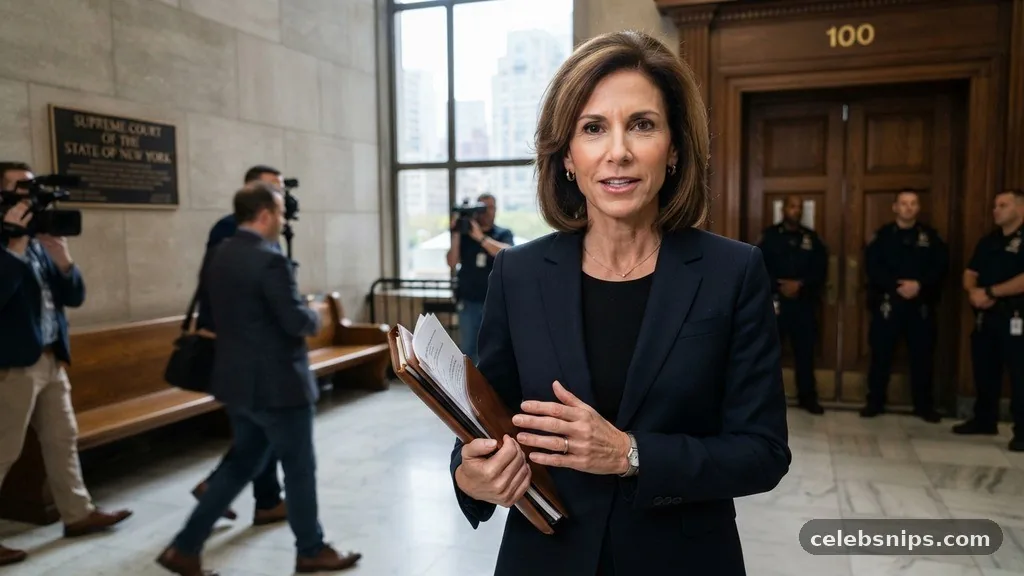
Rotunno’s background is best understood through the kind of work she chose. She did not become known because of a television role, elected office, or corporate leadership position; she became known because a criminal-defense practice led to a major trial involving one of the most recognizable defendants of the #MeToo era.
Public accounts describe her as operating the Donna Rotunno Law Office. The available record does not support a detailed list of every client or case handled by the practice, and confidentiality rules mean that a lawyer’s complete client history is rarely public.
Donna Rotunno’s Legal Career in Chicago
Rotunno’s core professional role has been that of a criminal-defense lawyer. Her work involves defending people accused of crimes, a responsibility that can include preparing cases for trial, examining prosecution evidence, advising clients, and presenting arguments designed to create reasonable doubt.
Criminal defense is different from proving that a client is morally popular or socially sympathetic. The legal question is whether the prosecution has met its burden under the relevant criminal statute, and an attorney may challenge evidence even when the accusations are disturbing or widely believed by the public.
Rotunno’s practice became particularly associated with cases involving allegations of sexual misconduct. Such cases can turn on disputed accounts, communications between the parties, witness credibility, timing, consent, and the limits on what evidence a jury may properly consider.
Before her Weinstein representation, she was not a household name. Her Chicago work nevertheless supplied the experience and professional identity that made her a plausible choice for a complex defense involving multiple accusers, extensive media attention, and a prosecution in another state.
Her career also illustrates how legal prominence can arrive suddenly. A lawyer may spend years handling cases that attract little national coverage, then become a public figure because one client or one proceeding receives sustained attention.
Defense work and public advocacy
Rotunno has spoken publicly in a forceful style about the rights of defendants and the behavior of women who accuse men of sexual misconduct. Some of her remarks drew criticism because opponents considered them dismissive of survivors, while supporters viewed them as an unapologetic explanation of defense strategy.
Her comments should be separated from the legal duties of the defense team. A lawyer’s public statements may shape public perception, but the verdict depends on admissible evidence, judicial rulings, jury deliberations, and the prosecution’s ability to prove the charges beyond a reasonable doubt.
That distinction became especially important during the Weinstein proceedings. The trial was both a legal event and a cultural event, meaning every strategic statement was likely to be analyzed through the wider debate over sexual assault, power, consent, and the #MeToo movement.
Her Role in the Harvey Weinstein Trial
Rotunno joined Harvey Weinstein’s defense team for his criminal trial in New York. Weinstein, the former film producer, faced charges connected to allegations of sexual assault and rape, and the proceeding became one of the most significant courtroom tests arising from the public reckoning over sexual misconduct in entertainment.
Rotunno served as a visible defense attorney alongside lead counsel. Her courtroom work included questioning witnesses and presenting arguments intended to challenge the prosecution’s interpretation of the evidence and the testimony of the women who accused Weinstein.
The prosecution’s case involved allegations from multiple women, but the New York trial focused on specific criminal charges rather than every accusation that had appeared in public reporting. That legal limitation is important: public allegations, civil claims, media interviews, and criminal counts are not interchangeable categories.
During the trial, Rotunno argued that the women’s conduct and communications with Weinstein raised questions about whether their encounters had been consensual or whether the prosecution had proved the required elements of the offenses. Her strategy drew intense criticism, particularly when she questioned accusers about their behavior after alleged assaults.
Rotunno also gave media interviews during the proceedings. Her comments made her one of the most recognizable defense lawyers associated with the case, while also placing her at the center of debate about how attorneys should discuss sexual-assault cases in public.
The trial result
In February 2020, a Manhattan jury found Weinstein guilty of a criminal sexual act and third-degree rape. In March 2020, the court sentenced him to 23 years in prison.
The verdict was a major defeat for the defense and a landmark result for prosecutors who had pursued the case. It did not resolve every public allegation against Weinstein, because the criminal trial addressed the charges before that court rather than every claim made in the broader public record.
Weinstein maintained his innocence, and the defense challenged the prosecution’s case throughout the proceedings. Rotunno’s representation therefore needs to be described accurately: she was a defense lawyer advocating for her client, not a judge or fact-finder responsible for determining the final verdict.
The New York conviction was later overturned by New York’s highest court in 2024, which ordered a new trial after finding that the trial judge had improperly admitted prejudicial testimony about uncharged alleged acts. That appellate ruling concerned trial fairness and evidentiary procedure; it did not amount to a judicial declaration that every allegation was false.
Legal Strategy and Public Reaction
Rotunno’s approach was notably confrontational. She argued that a defendant’s constitutional rights should not be weakened because a case had become a symbol of a social movement, and she repeatedly focused on the difference between public narratives and proof required in criminal court.
One of her most widely reported positions involved her statement that she had never been sexually assaulted. She used that personal assertion while discussing her views about women’s choices and credibility, but critics argued that an individual lawyer’s experience could not serve as a measure for how other women respond to trauma.
The response to her comments reflected a broader divide. Supporters said she was emphasizing individual responsibility and the presumption of innocence, while critics said her words reinforced stereotypes about how a “real” victim should behave after an assault.
That debate was not merely a media dispute. It connected directly to the evidentiary questions raised at trial, including whether a person’s later contact with an alleged attacker should be treated as proof of consent and how much weight a jury should place on conduct after an alleged crime.
New York law and judicial rulings govern what evidence a jury may hear. Lawyers can argue about relevance and credibility, but judges decide whether particular evidence is admissible, and jurors ultimately decide what facts have been proved.
Why her style attracted attention
Many criminal-defense lawyers make aggressive arguments without becoming nationally known. Rotunno attracted unusual attention because the Weinstein case involved a powerful entertainment executive, numerous public accusations, and a movement that had changed how institutions discussed sexual misconduct.
Her public persona also contrasted with the expectations some viewers had for attorneys in sexual-assault cases. She did not present herself as a neutral commentator; she spoke as an advocate whose job was to attack weaknesses in the prosecution’s theory.
That approach may be effective before some audiences and damaging before others. In a criminal trial, however, public approval is not the legal standard. The defense must test the evidence and protect the client’s rights, while the prosecution must prove the charges beyond a reasonable doubt.
Recognition, Criticism, and Professional Significance
Rotunno did not become prominent because she won a major professional award or held a public office. Her recognition came from the visibility of her work on the Weinstein defense, which placed her in broadcasts and newspaper coverage around the world.
Her significance lies partly in the way she represented a traditional criminal-defense position during a cultural turning point. The case forced the public to confront a difficult tension: defendants are entitled to a vigorous defense, while complainants deserve to be heard without being reduced to stereotypes about perfect victim behavior.
Rotunno’s role also highlighted the difference between representation and endorsement. A lawyer may defend an accused person without personally adopting every factual claim the client makes, and representation alone does not establish that the lawyer agrees with the alleged conduct.
At the same time, attorneys who speak publicly can become associated with the arguments they make. Rotunno’s statements about women, trauma, and credibility therefore became part of her public identity, even though her formal professional duty remained the defense of her client within the law.
There is no reliable basis for describing her as one of the country’s most decorated lawyers, nor is there a verified list of major awards that defines her career. The strongest documented description is narrower and more accurate: she is a Chicago criminal-defense attorney who gained national attention through the Weinstein trial.
Why the career remains relevant
The legal issues raised by the case continue to matter beyond one defendant. They include the treatment of prior or subsequent conduct, the risks of trying a case in the media, the limits of character evidence, and the challenge of separating cultural judgment from criminal proof.
Rotunno’s career is also relevant to discussions about women in law. Her public position was unusual not because women cannot serve as defense lawyers, but because she became a prominent woman advocating for a male defendant in a case centered on allegations against women.
That fact produced both praise and criticism. It also made her a frequent subject of questions about whether a female lawyer should approach sexual-assault defense differently, a question for which there is no single professional answer.
Personal Life, Partner, and Family Information
Searches for Donna Rotunno’s partner, husband, wedding, children, parents, and family often produce pages that state personal details without showing reliable evidence. No authoritative public source clearly establishes a current spouse or partner, and her relationship status should therefore be treated as unknown.
There is also no dependable public record confirming that she is married or has children. A lack of public confirmation is not proof that a person has no family; it simply means that the information has not been established responsibly in sources suitable for biography.
Rotunno’s professional visibility does not make every private detail public property. Her legal career and public statements are relevant to readers, while speculation about relationships, private residences, or family members would add claims that cannot be verified.
The same caution applies to physical details. Common searches for Donna Rotunno’s height or measurements do not lead to a trustworthy, consistently sourced figure, so those numbers should not be presented as facts.
Her public identity is primarily professional. The available evidence supports discussion of her law practice, trial work, and public legal commentary far more strongly than discussion of her private life.
Net Worth, Income, and Current Professional Status
No authoritative source publishes Donna Rotunno’s net worth. Websites that provide exact dollar estimates generally do not explain how they calculated legal fees, business income, taxes, expenses, investments, or personal assets, so their figures should be treated as speculation rather than financial fact.
Her likely professional income would be connected to legal representation and the operation of a private criminal-defense practice. That does not establish a salary, because private lawyers may earn different amounts depending on retainers, case length, expenses, staffing, collections, and whether a matter proceeds to trial.
High-profile representation can bring visibility, but visibility does not reveal a lawyer’s finances. A major case may involve substantial preparation and long hours without producing a publicly disclosed fee, and ethical or contractual arrangements may keep that information private.
Rotunno’s practice is associated with Chicago, but publicly available information does not support a precise statement about her current caseload, office structure, or annual income. Readers should be cautious with websites that turn an attorney’s media appearances into an invented net-worth calculation.
Her current professional status also requires careful wording. She remains publicly identified with criminal-defense work, but the available record does not justify listing every current client, active case, or business activity without a recent authoritative source.
What can responsibly be said about her finances?
The responsible answer is limited but useful: Rotunno’s income has been connected to private legal practice, and no verified net-worth figure is publicly available. An exact number would require financial records that have not been made public.
That answer is more reliable than repeating a rounded estimate. Net-worth pages often copy one another, creating the appearance of agreement without independent evidence.
Social Media and Public Presence
Rotunno’s public profile has largely been built through courtroom coverage and interviews rather than through a clearly verified celebrity social-media brand. Namesake accounts can exist on social platforms without proving that the person behind them is the attorney.
For that reason, it is not responsible to publish a username, follower count, or account description unless the account is clearly linked to her law practice or confirmed through a reliable professional source. Follower totals also change constantly and should never be treated as permanent biographical facts.
Her most visible public communications came during the Weinstein proceedings, when journalists quoted her statements and televised interviews. Those appearances provide stronger evidence of her public views than unattributed social posts or profile pages.
Readers interested in her professional activity should prioritize official legal records, reputable news coverage, and clearly attributable law-office information. They should be skeptical of pages that use her name to promote services or opinions without confirming authorship.
What Donna Rotunno’s Career Shows About Criminal Defense
Rotunno’s career demonstrates how criminal defense operates under pressure. The lawyer must challenge the prosecution’s evidence even when the public has already formed an opinion, and that duty can place the attorney in conflict with prevailing social attitudes.
The Weinstein case made those pressures unusually visible. The prosecution presented allegations in a climate shaped by #MeToo, while the defense argued that the jury still had to focus on criminal charges, admissible evidence, and proof beyond a reasonable doubt.
Her work also shows why courtroom advocacy can be misunderstood. Cross-examination may appear harsh because it tests memory, motive, timing, communications, and consistency, but the intensity of questioning does not by itself determine whether the lawyer’s position is legally permissible.
At the same time, legal strategy has consequences outside the courtroom. Statements about accusers can influence public trust, shape media coverage, and affect how survivors believe the justice system will treat them.
Rotunno’s public career therefore sits at the intersection of law and culture. She became known not simply for appearing in one trial, but for embodying a defense perspective during a period when institutions were reconsidering how allegations of sexual assault and sexual misconduct were investigated and discussed.
That broader significance should not obscure the basic facts. She is a lawyer, not a judge; Weinstein was her client, not her business partner; and the legal outcome was determined through the court process rather than through television interviews.
Frequently Asked Questions
How old is Donna Rotunno?
Her exact age cannot be confirmed confidently because a reliable public date of birth has not been established. Coverage of the Weinstein trial described her as being in her forties in 2020, but that does not provide a verified current age.
Where did Donna Rotunno go to law school?
Published professional profiles identify her as a graduate of DePaul University College of Law in Chicago. Reports commonly state that she received her law degree around 2000, although her complete educational history is not extensively documented in public sources.
What law firm does Donna Rotunno work for?
She has been associated with the Donna Rotunno Law Office, a criminal-defense practice based in Chicago. Public information does not establish a complete list of the firm’s current clients or active matters.
Why is Donna Rotunno famous?
She became nationally known for serving on Harvey Weinstein’s defense team during his 2020 criminal trial in New York. Her courtroom arguments and outspoken comments about accusers, consent, and defense strategy also generated extensive public discussion.
Who is Donna Rotunno’s partner?
No reliable public source confirms a current partner or spouse. Online claims about her dating life, wedding, or family should not be treated as established unless supported by a clearly attributable and reputable source.
Is Donna Rotunno married?
Her marital status has not been reliably confirmed in authoritative public reporting. There is no sufficient evidence to state that she is married or unmarried as a current fact.
Does Donna Rotunno have children?
No reliable public source clearly confirms whether she has children. Because family information is private and inconsistently reported, it should not be inferred from social-media posts or unsourced biography pages.
What is Donna Rotunno’s net worth?
No verified public net-worth figure is available. Her income would likely come primarily from private criminal-defense work, but legal fees, expenses, assets, and liabilities are not publicly disclosed in a way that would support an accurate estimate.
Where is Donna Rotunno from?
She is publicly associated with Chicago, Illinois, where she built her criminal-defense practice. A precise birthplace and detailed early-life history are not reliably established in the available public record.
What happened to the Weinstein conviction?
Weinstein was convicted in New York in 2020 and sentenced to 23 years in prison. In 2024, New York’s highest court overturned that conviction and ordered a new trial, citing improper admission of prejudicial testimony about uncharged alleged acts.
Final Takeaway
Donna Rotunno is a Chicago criminal-defense attorney whose national profile came from representing Harvey Weinstein in New York. Her legal career is well documented through that trial and her public defense of adversarial advocacy, while her exact age, net worth, height, partner, and family details remain unverified or private.
That distinction is central to understanding Donna Rotunno’s age, career, and legal career without repeating internet speculation. For the most dependable updates, readers should rely on court records, professional licensing information, and established news reporting rather than copied biography claims.