


Colter Wall is a Canadian country singer, songwriter, and guitarist known for his deep baritone, spare acoustic arrangements, and songs rooted in prairie life, ranch work, old ballads, and the American West. Born in Swift Current, Saskatchewan, he emerged from a local folk scene before attracting wider attention with “Sleeping on the Blacktop” and his 2017 debut album.
Readers searching for Colter Wall’s age, career, and music success usually want more than a birthday. They also want to understand how a young Saskatchewan musician built a distinctive Americana career, why his voice sounds so weathered, which albums matter most, and what is actually known about his private life and finances.
Colter Wall at a Glance
Colter Wall was born on June 27, 1995, in Swift Current, Saskatchewan, Canada. As of 2025, he is 30 years old. His career is centered on country, folk, western, and Americana music, with lyrics that often draw from working landscapes rather than contemporary pop-country themes.
| Detail | Information |
|---|---|
| Full name | Colter Wall |
| Date of birth | June 27, 1995 |
| Age | 30 as of 2025 |
| Birthplace | Swift Current, Saskatchewan, Canada |
| Nationality | Canadian |
| Profession | Singer-songwriter, guitarist, and recording artist |
| Genres | Country, folk, western, Americana, and roots music |
| Active period | 2010s to the present |
| Breakthrough song | “Sleeping on the Blacktop” |
| Most recent major studio album | Little Songs, released in 2023 |
Colter Wall is not known by a different stage name. Public biographies and his recording credits identify him simply as Colter Wall. His father is Brad Wall, who served as premier of Saskatchewan from 2007 to 2018, but Colter Wall’s professional identity has developed separately through music.
His age is straightforward to calculate, but it changes each June. Articles that list him as 29 or 30 may both have been accurate when published, so a birth date is more useful than a permanently stated age.
Early Life in Saskatchewan
Wall grew up in Saskatchewan, a province associated with wide farmland, prairie towns, ranching, and long distances between communities. That setting matters because his writing frequently uses the language of horses, highways, cattle, weather, freight, and work. The rural imagery in his songs is not simply an adopted visual style; it reflects the landscape that shaped his musical imagination.
He began playing guitar as a teenager and was influenced by older country, folk, blues, and western performers. Among the artists commonly associated with his musical development are Bob Dylan, Townes Van Zandt, Hank Williams, Johnny Cash, and traditional cowboy singers. His early taste leaned toward direct songwriting and strong storytelling rather than polished commercial production.
Wall’s family was publicly known in Saskatchewan because of his father’s political career. That connection gave the public a clear biographical detail, but it does not explain his sound or his audience. His music has been judged primarily through recordings and live performances, where the central appeal is his voice, phrasing, and song selection.
Before he became an internationally recognized touring musician, Wall performed in smaller settings and developed a reputation through live appearances and independent releases. Those beginnings placed him closer to the folk and roots circuit than to the mainstream Nashville pipeline.
Education and the Move Toward Music
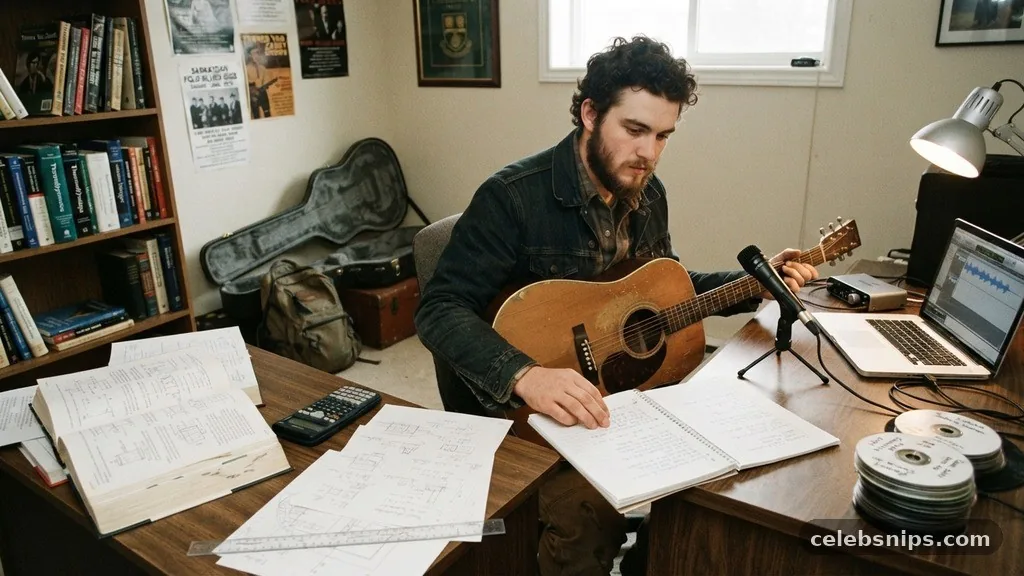
Wall attended the University of Saskatchewan, where he studied mechanical engineering before focusing more heavily on music. Public accounts describe the degree path as part of his life before music became a full-time profession, although the precise details of when he left formal study are not always presented consistently.
His transition matters because it shows that his career did not begin with a major-label television audition or a heavily manufactured pop launch. He built momentum through songs, recordings, festival appearances, and word of mouth. The shift from student life to touring was gradual, not an overnight transformation.
How Colter Wall Started Making Music
Wall’s first widely noticed recordings arrived while he was still a young musician. His early work showed a strong preference for acoustic guitar, low-register vocals, and compact narratives. Instead of writing primarily about nightlife or romantic drama, he often wrote from the perspective of drifters, laborers, cowboys, and people living outside the center of modern urban life.
His debut independent project, Imaginary Appalachia, was released in 2015. The title points toward the connection between regional American traditions and the imaginative world of roots music, even though Wall himself came from Saskatchewan. The record helped introduce listeners to songs such as “Sleeping on the Blacktop,” “The Devil Wears a Suit and Tie,” and “Motorcycle.”
“Sleeping on the Blacktop” became the song most closely linked to Wall’s early breakthrough. Its driving rhythm, stark lyrics, and rough-edged vocal delivery gave it an immediate identity. The track also demonstrated that a simple arrangement could carry a song effectively when the performance had enough character.
Wall’s early work reached listeners outside Canada through streaming, online video, touring, and attention from established musicians. The exposure did not erase the independent quality of the recordings. Instead, it helped move a prairie-born singer into the wider Americana and country conversation.
- 2015: Imaginary Appalachia introduced Wall’s early songwriting and distinctive vocal style.
- 2017: His self-titled album expanded his audience and received major industry attention.
- 2018: Songs of the Plains placed Saskatchewan and western storytelling closer to the center of his work.
- 2020: Western Swing & Waltzes and Other Punchy Songs explored older western and dance-hall traditions.
- 2023: Little Songs continued his focus on concise country and western narratives.
The Breakthrough: “Sleeping on the Blacktop”
“Sleeping on the Blacktop” became the clearest early marker of Colter Wall’s music success. The song is built around movement, danger, and life on the road, with a rhythmic structure that makes it easy to remember without sounding like conventional radio country. Its appeal crossed genre boundaries because listeners could hear elements of folk, outlaw country, blues, and western music in the same performance.
The track also helped define the contrast at the center of Wall’s public image. He was young, yet his voice sounded unusually deep and aged.
He came from Canada, yet his songs often dealt with American frontier myths and western landscapes. He was working within country music, but his stripped-back recordings did not resemble the highly produced sound common on mainstream country radio.
Wall’s visibility grew after established artists and music audiences began responding to his work. He appeared in front of larger crowds, expanded his touring schedule, and gained a following among listeners who wanted a more traditional or roots-oriented form of country music.
The song remains important because it was not merely a viral clip detached from a larger career. It led listeners toward a body of work that included original compositions, traditional material, and carefully chosen covers. Wall’s later albums benefited from the identity established by that first widely recognized single.
Why the Song Connected
One reason the song connected is economy. Wall does not overcrowd the arrangement with layers or vocal effects, so the guitar pattern and vocal phrasing remain central. Another is the song’s sense of place: highways, blacktop, and restless travel are presented as lived realities rather than decorative references.
The track also suited the streaming era. A distinctive voice can be recognized within seconds, and Wall’s baritone provides that kind of immediate signal. “Sleeping on the Blacktop” gave new listeners a clear answer to the question, “What makes this artist different?”
Albums and Major Career Milestones
Imaginary Appalachia
Released in 2015, Imaginary Appalachia established the basic ingredients of Wall’s music: acoustic instrumentation, spare production, traditional country language, and a voice that sits unusually low in the register. The project included original songs alongside the kind of traditional-minded writing that would remain important throughout his career.
The album’s strongest achievement was identity. It did not present Wall as a generic young country singer. Instead, it introduced a performer with a specific connection to old ballad forms, rural imagery, and the darker side of life on the road.
Colter Wall
Wall’s self-titled album arrived in 2017 and expanded his reach. It included “Motorcycle,” “The Devil Wears a Suit and Tie,” and “Me and Big Dave,” songs that showed his interest in compact characters and vivid scenes.
The album also brought professional recognition. Wall received a Juno Award nomination for Contemporary Roots Album of the Year for the self-titled record, helping establish him within the Canadian music industry while his international audience continued to grow.
His self-titled work is often the best starting point for new fans because it balances his most recognizable style with enough variety to show how he writes. The performances remain restrained, but the songwriting is broad enough to move from outlaw imagery to reflective and traditional material.
Songs of the Plains
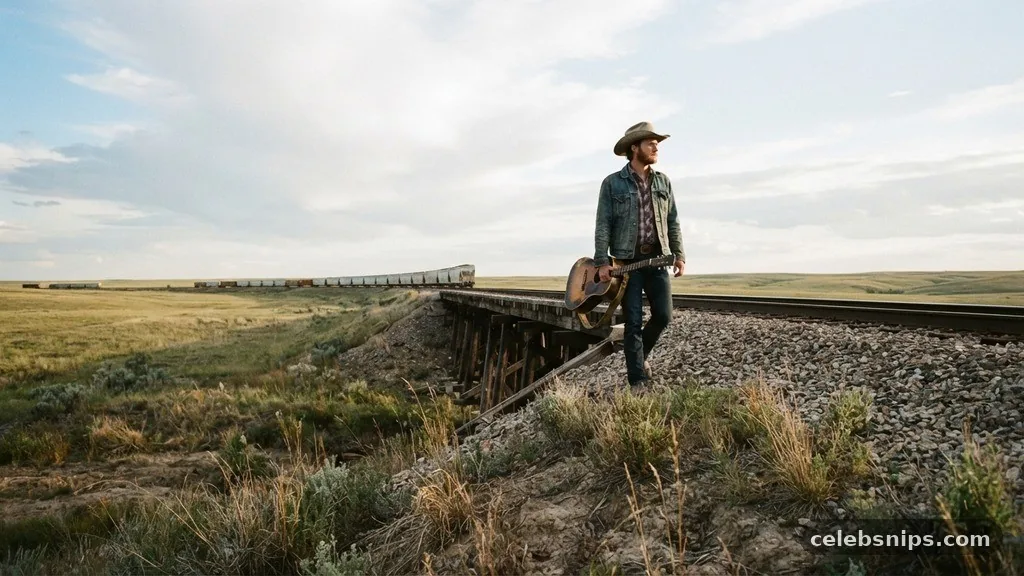
Released in 2018, Songs of the Plains made Wall’s Saskatchewan identity more central. The album drew on cowboy songs, prairie references, train imagery, and traditional western forms. Its title was direct: this was music connected to the plains, not just an abstract version of Americana.
The record included songs such as “The Trains Are Gone,” “Saskatchewan in 1881,” and “Thinkin’ on a Woman.” Wall also continued his practice of blending original songs with older material, treating traditional music as a living repertoire rather than a museum piece.
Songs of the Plains was significant because it clarified the regional foundation beneath Wall’s work. He was not simply borrowing the vocabulary of old country music. He was using that vocabulary to tell stories connected to western Canada and the broader North American frontier tradition.
Western Swing & Waltzes and Other Punchy Songs
Wall released Western Swing & Waltzes and Other Punchy Songs in 2020. The title signals the album’s relationship to dance-hall country, western swing, cowboy standards, and older forms of popular music.
The project included songs such as “High & Mighty,” “Cypress Hills and the Big Country,” and “Big Iron,” the last of which is a well-known cover associated with western songwriter Marty Robbins. Wall’s version brought his low voice and unhurried delivery to a song already familiar to many country listeners.
Rather than chasing a new pop sound, Wall used the album to deepen the musical world he had been building. The result was a record that connected with fans interested in traditional country, bluegrass-adjacent textures, folk storytelling, and the imagery of the American West.
Little Songs
Little Songs was released in 2023 and continued Wall’s focus on short, sharply drawn narratives. The album included material such as “The Last Loving Words,” “Evangelina,” and “Honky Tonk Nighthawk,” alongside traditional and western-flavored songs.
The record did not represent a complete break from his earlier work. Its importance lies in continuity. Wall remained committed to vocal presence, acoustic clarity, traditional structures, and songs that can stand without heavy studio decoration.
Colter Wall’s Musical Style and Voice
Wall’s music is usually described through overlapping labels: country, folk, Americana, western, and roots music. None of those terms fully contains his work, but together they explain the territory. His records draw from cowboy ballads, honky-tonk, folk revival songwriting, western swing, bluegrass traditions, and classic country.
The defining feature is his baritone. Wall’s voice is deep, dry, and resonant, with a grain that makes even relatively quiet performances feel substantial. Because he developed that vocal identity at a young age, many new listeners initially assume he is much older than he is.
There has been public curiosity about what happened to Wall’s voice. The most responsible answer is that his low register is a natural and highly recognizable part of his singing style, while some online discussions about smoking, vocal damage, or specific medical causes are not reliable enough to state as fact without a direct, authoritative confirmation.
His guitar work is usually functional rather than showy. It supports the narrative, establishes the rhythm, and leaves room for the vocal. That restraint is deliberate in effect, even when the performances include more elaborate western swing or full-band arrangements.
Traditional Songs and Original Writing
Wall’s repertoire includes both original songs and covers. His versions of traditional or previously recorded material connect him with artists such as Marty Robbins, Hank Williams, and other figures whose work remains central to country and western music.
His original writing tends to favor observation over explanation. A character may be identified through a few physical details, a location, a job, or a decision. The songs often leave space for listeners to infer the broader story.
That approach helps explain why Wall appeals to both older country listeners and younger fans who discover roots music through streaming platforms. The recordings sound historically informed without being presented as academic exercises.
Touring, Audience, and Music Success
Wall’s success has been built through more than album sales. Touring has been important because his music depends heavily on performance: the vocal has to fill a room, and the songs need enough rhythmic strength to work outside the studio.
He has performed at country, folk, Americana, and roots festivals, reaching audiences that may not listen to mainstream country regularly. His fan base includes listeners drawn to traditional songwriting, western imagery, independent artists, and the contrast between his age and the historical character of his material.
His songs have also traveled through digital platforms. “Sleeping on the Blacktop” became a particularly important discovery point, while “The Devil Wears a Suit and Tie,” “Motorcycle,” and “Big Iron” helped listeners explore different sides of his repertoire.
Wall’s association with the broader Americana scene has given him access to a wider audience than a strictly regional Canadian career might have provided. At the same time, he has kept a strong connection to Saskatchewan and western Canadian identity.
His influence should be described carefully. He is a successful and distinctive artist, but claims that he single-handedly revived country music or transformed the entire genre would go beyond the evidence. A more accurate description is that he helped bring traditional western textures and an unusually deep vocal style to a new generation of country and roots listeners.
Relationship to Other Artists
Wall is sometimes discussed alongside artists such as Tyler Childers, Sturgill Simpson, and The Dead South because they share audiences interested in roots-oriented music. That does not mean their styles are interchangeable. Wall’s work is more strongly tied to cowboy songs, prairie imagery, and traditional western vocal delivery.
His music also sits near the folk and bluegrass worlds without being strictly bluegrass. The common ground is acoustic instrumentation, narrative songwriting, and respect for older forms. The differences are equally important: Wall often favors a slower, heavier delivery and a more explicitly western visual and lyrical vocabulary.
Personal Life, Family, and Public Information
Colter Wall keeps much of his private life away from the spotlight. Publicly established information about his career is far more extensive than information about his romantic relationships, children, or day-to-day residence.
His father, Brad Wall, is a known public figure and former premier of Saskatchewan. That family connection is documented, but there is limited reliable public information that would justify detailed claims about other relatives or private family routines.
No reliable public source should be used to state that Wall is married or to identify a current wife or partner unless the information comes directly from him or from a highly credible report. Online pages frequently repeat relationship claims without showing evidence, so those claims should be treated cautiously.
The same standard applies to height, weight, home address, and personal finances. These details are commonly requested in celebrity searches, but popularity does not make private information public or verified.
Net Worth, Income, and Financial Claims
There is no authoritative public figure that establishes Colter Wall’s exact net worth. Websites that publish precise estimates may use streaming assumptions, touring revenue, album sales, publishing rights, or social-media visibility, but private contracts, taxes, expenses, management fees, and ownership arrangements are not normally available.
His likely professional income sources include recorded music, songwriting royalties, live performances, merchandise, and licensing. That list describes plausible categories connected to his career; it does not reveal how much he earns from any one source.
Streaming numbers also do not translate directly into personal income. Revenue can be divided among platforms, labels, distributors, publishers, co-writers, and rights holders, and the amount paid per stream varies by service and agreement.
Touring can generate meaningful income, but gross ticket revenue is not the same as take-home pay. Promoters, venues, musicians, travel, production, booking agencies, insurance, and taxes all affect the final amount.
For that reason, a trustworthy biography should say that Wall is an established recording and touring artist while leaving his net worth unconfirmed. A precise online estimate should not be presented as a verified fact.
Controversies, Canceled Shows, and Current Status
Searches for “Why was Colter Wall canceled?” can refer to canceled or postponed tour dates, online criticism, or the broader use of the word “canceled” in internet discussions. There is no clear basis for claiming that Wall has been broadly removed from the music industry or formally canceled as a public performer.
Concert schedules can change for ordinary reasons, including illness, travel problems, venue issues, production complications, or scheduling conflicts. A single canceled appearance does not establish a major controversy, and claims about a specific cancellation should be checked against an official tour notice or venue announcement.
Wall has also attracted political curiosity because of his Saskatchewan background, rural subject matter, and traditional country image. Those elements do not prove that he belongs to a particular political movement. Unless he makes a clear public statement, it is better not to label him conservative, liberal, or otherwise based only on his songs or family background.
For current tour dates and announcements, readers should rely on Wall’s official channels rather than reposted schedules. His official website is the most appropriate place to check whether a date, release, or announcement is current.
As of the latest broadly established information, Wall remains associated with country and western music, with Little Songs serving as his most recent major studio album. Future releases and tour plans may change, so current details should be verified close to the date of an event.
What Makes Colter Wall’s Career Distinctive?
Wall’s career stands out because the sound arrived before the conventional life story many listeners expected. A musician born in 1995 became known for songs that seemed connected to an earlier century, yet the recordings did not feel like novelty performances.
His strongest quality is consistency. From Imaginary Appalachia through Little Songs, he has kept the focus on voice, guitar, narrative, and traditional country atmosphere. He has expanded his arrangements at times, but he has not abandoned the core style that made listeners pay attention.
Regional identity is another important part of the picture. Saskatchewan is not merely a birthplace listed in a biography table; it is part of the geographical imagination behind his music. Prairie distances, western work, old roads, and frontier memory appear repeatedly in the songs and albums.
His success also shows that modern audiences can support music that does not follow current pop formulas. Wall’s rise came through a combination of online discovery, touring, critical attention, and a sound that could be recognized immediately.
That does not make him an entirely isolated figure. He works within traditions built by many earlier artists, and his listeners often arrive through those same country, folk, and Americana pathways. His contribution is the way he combines those influences with a voice and regional perspective that are unmistakably his own.
Frequently Asked Questions
How old is Colter Wall?
Colter Wall was born on June 27, 1995. He is 30 years old as of 2025, and he turns a year older every June 27.
Where is Colter Wall from?
Colter Wall is from Swift Current, Saskatchewan, Canada. His Saskatchewan background is closely connected to the prairie and western themes in his songwriting.
What is Colter Wall known for?
He is known for his deep baritone voice, country and western songwriting, acoustic performances, and songs such as “Sleeping on the Blacktop” and “The Devil Wears a Suit and Tie.”
What happened to Colter Wall’s voice?
His unusually deep voice is a defining feature of his singing. Online claims that attribute it to a specific medical condition, smoking history, or vocal injury should not be treated as confirmed unless supported by a direct and reliable statement.
Is Colter Wall married?
His current marital or relationship status has not been reliably established in widely available public information. Claims about a wife or partner should be treated cautiously unless confirmed by Wall or a reputable source.
Final Takeaway
Colter Wall is a Canadian country and Americana artist whose career grew from Saskatchewan roots, independent recordings, touring, and a highly recognizable baritone. His major releases, including Imaginary Appalachia, Songs of the Plains, Western Swing & Waltzes and Other Punchy Songs, and Little Songs, show a consistent commitment to western storytelling and traditional music.
The clearest facts about Colter Wall’s age, career, and music success are public, while his net worth, relationships, and some personal details remain unconfirmed. For accurate updates, follow official announcements and judge new claims against reliable evidence rather than recycled celebrity-profile estimates.